Category: Autism Resources for Parents
-
Welcome to the final chapter of our series on using a visual schedule at school to support your child from home to the classroom.It’s 7:42 a.m. Your child has picture cards on the fridge showing the morning routine: wake up, get dressed, eat, brush teeth, shoes. Without a single argument, they check each one off.…
-
Part 2 of 3: Building Sensory-Supportive Learning Environments at Home Homework can be challenging for many autistic children, particularly after a full day at school. By the time a child arrives home, they may have already processed hours of conversations, classroom noise, bright lights, social expectations and changes in routine. Even when a child wants…
-
The picture schedule that gets your child through the morning at home can do the same job at school, especially when managing school transitions burnout. This is Part 3 of a 3-part series on helping children get through school transitions without burning out. Part 2 covered the home side, a sensory-safe homework and study space. Here…
-
Some mornings, your child isn’t being difficult—they are running on empty. Navigating autistic child burnout means recognizing when the usual routine asks for energy they simply don’t have. A pre-agreed “low-energy menu” offers a gentle way to structure mornings without adding pressure to a dysregulated system. How a Low-Energy Menu Helps with Autistic Child Burnout…
-
5 Nov 2026 · @Rubab N Mornings are often the hardest part of the day for autistic adults, because they stack sensory input, decisions, and transitions into a short window before you’ve had any time to settle. Alarms, bright bathroom lights, scratchy fabric, strong toothpaste, a crowded kitchen, a rushed commute: each is small on its own.…
-
A therapy session lasts about an hour. The week has 168. Here is what helps Beyond the Therapy Room in the other 167. Therapy can change how you understand yourself. Most of the change happens between appointments, in ordinary hours: when you wake up, eat lunch, answer a message, lie awake at 1 a.m. Whether you see…
-
Every meltdown has a reason, and once you learn to spot the reasons behind child meltdowns, most of them get shorter, quieter and less frightening for both of you. You know the scene. You’re in the grocery store, the cereal aisle is bright and loud, and your child is on the floor screaming because the red…
-
Picture a Tuesday morning commute. A fluorescent tube flickers in the train carriage. Someone’s perfume hangs in the air, a stranger’s headphones leak a tinny beat, and the tag in your shirt has been scratching since you dressed. Nothing here is an emergency. Everyone around you is scrolling their phones, calm. By the time you…
-
You say “five more minutes, then shoes on.” Five minutes later, your child is on the floor, shoes are flying, and you are both in tears. Transition meltdowns are not bad behavior or bad parenting. They are a predictable reaction to a child’s world changing without warning, and a simple visual matrix can prevent most…
-
If you are in immediate danger or have seriously hurt yourself, contact your local emergency number or go to the nearest emergency department. To find a crisis line in your country, visit findahelpline.com. Self-harm among autistic adults is often misunderstood as attention-seeking, manipulation, or “difficult behavior.” In reality, it is frequently a sign of overwhelming…
-
Minimizing transition friction is one of the hardest parts of the day for many autistic adults. Moving from one activity to the next is one of the hardest parts of the day for many autistic adults. Stopping a focused task and shifting to a break, a meal, or downtime means letting go, reorienting, and starting…
-
In the global conversation surrounding neurodiversity, the design of low-arousal sensory rooms represents a critical structural gap – while resources for early childhood intervention are abundant, actionable guidance for supporting autistic individuals across the lifespan remains remarkably scarce. As autistic adolescents transition into adulthood, environmental demands shift drastically. Without deliberate modifications, everyday environments can become catalysts for…
-
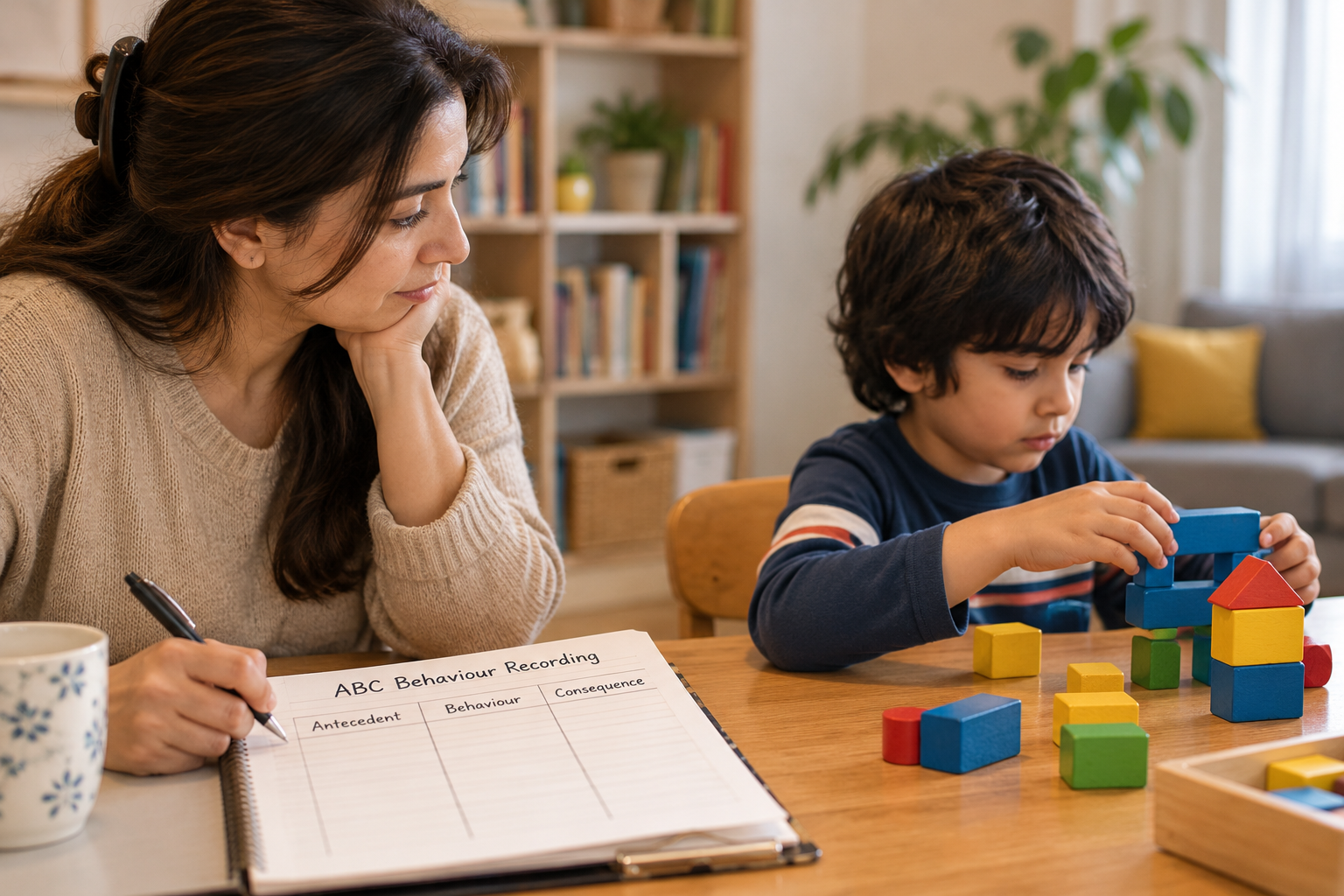
24 Oct 2026 · @Rubab N ABC Behaviour Recording is a game-changer when your child’s behaviour feels random, three simple printed sheets and a pen can show you it isn’t. Behaviour is communication, and for many autistic children, especially those with few words, a meltdown, a push or a run for the door is the clearest way…
-
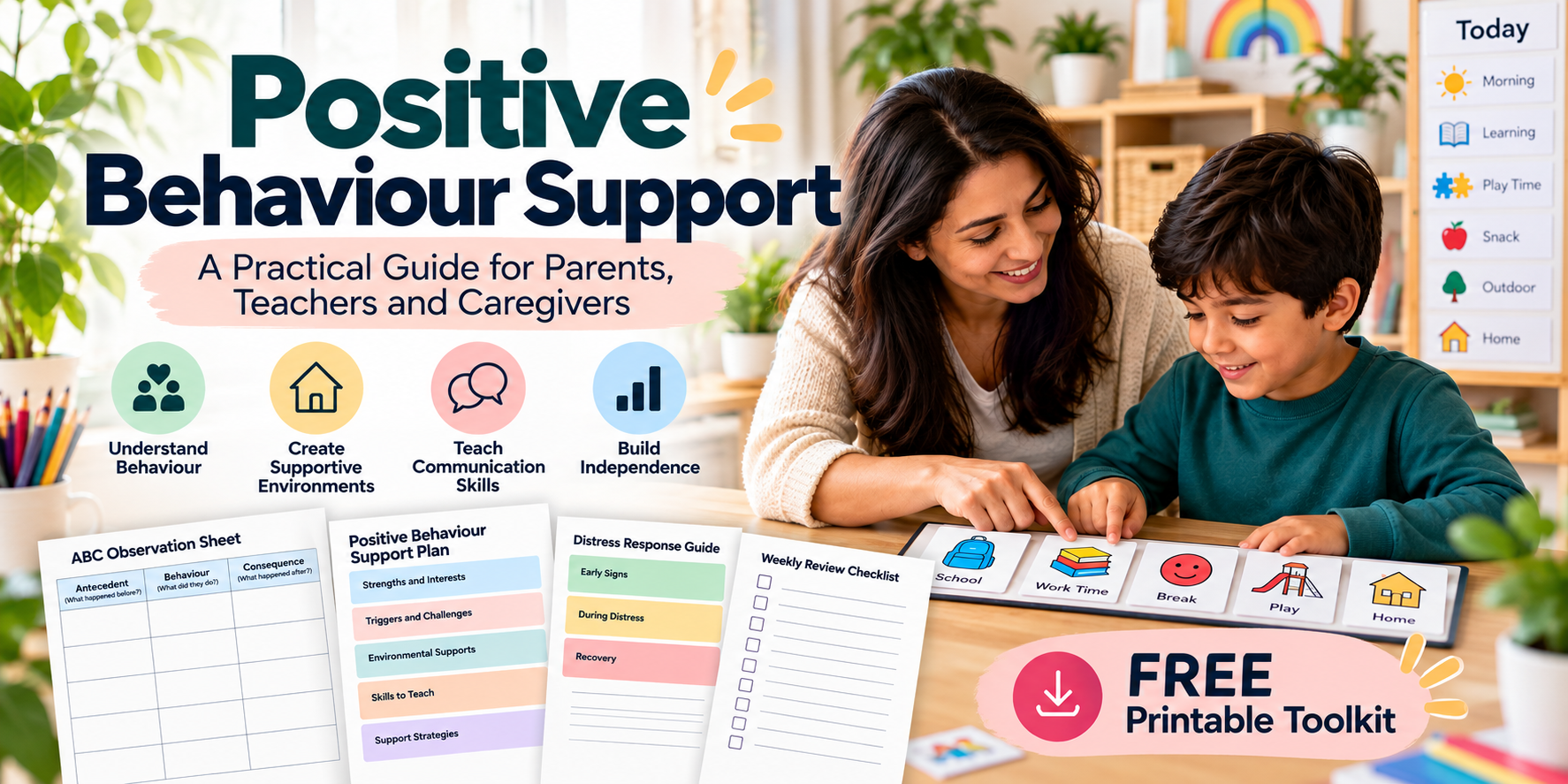
Positive Behaviour Support (PBS) offers a compassionate, practical approach to understanding why behaviour occurs. As outlined by the Association for Positive Behavior Support, this framework focuses on identifying proactive ways to improve a person’s quality of life. Behaviour is a form of communication. When a child or adult experiences distress, refuses a task, becomes overwhelmed or…
-
A TEACCH-inspired visual morning routine helps families create a more structured and supportive home environment for autistic children. Every autistic child deserves a home environment where they feel safe, understood, supported and encouraged to learn at their own pace. By incorporating strategies from the TEACCH Autism Program, everyday activities such as getting dressed, brushing teeth, eating meals,…