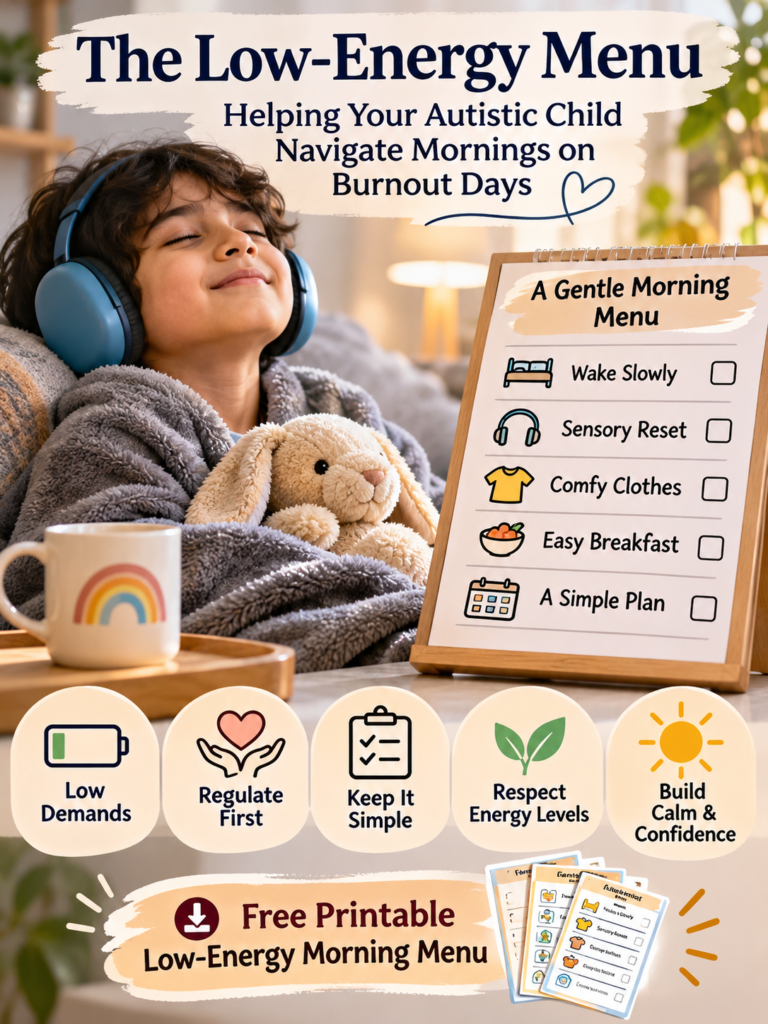
Some mornings, your child isn’t being difficult—they are running on empty. Navigating autistic child burnout means recognizing when the usual routine asks for energy they simply don’t have. A pre-agreed “low-energy menu” offers a gentle way to structure mornings without adding pressure to a dysregulated system.
How a Low-Energy Menu Helps with Autistic Child Burnout
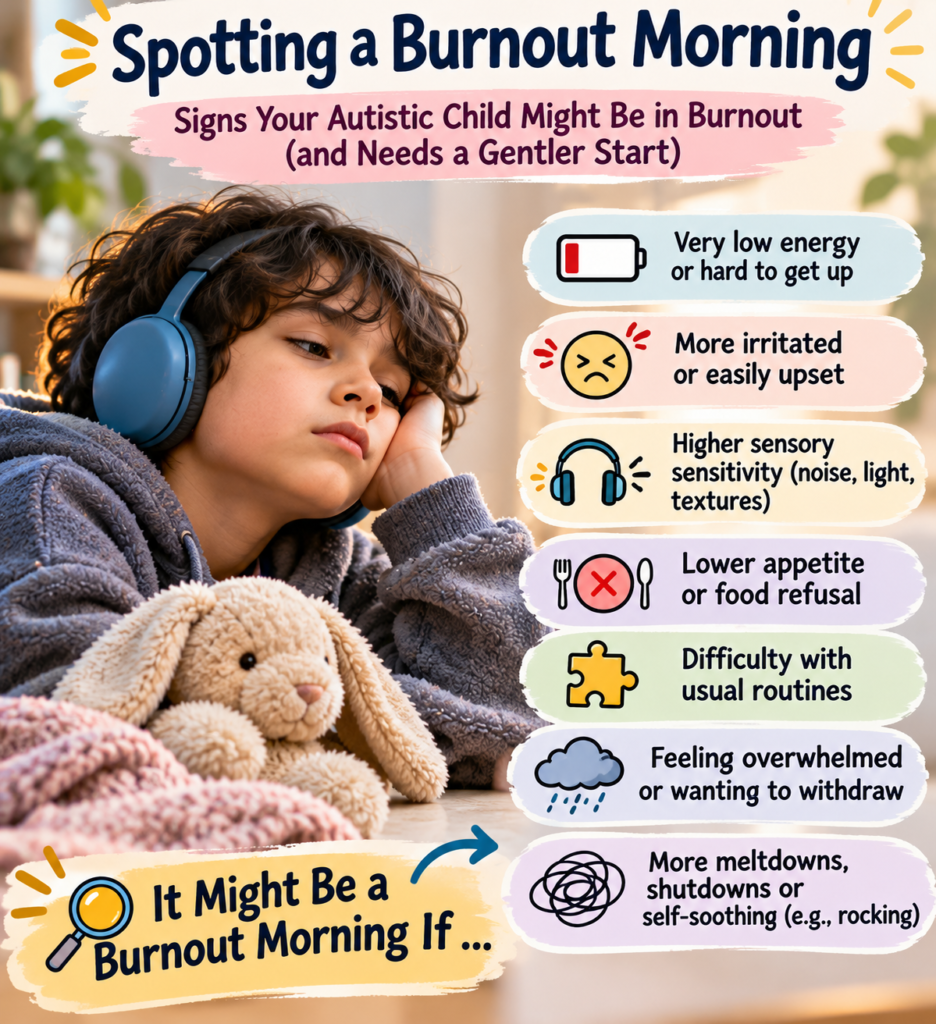
Autistic burnout is deep exhaustion that builds when a child spends too long masking, coping with sensory load or meeting demands that outrun their capacity. It shows up in the morning because that’s when the reserves are lowest and the demands come fastest.
Research with autistic adults describes burnout as chronic exhaustion, loss of skills and reduced tolerance for sensory input and demands (Raymaker et al., 2020).
Signs that it’s depletion, not defiance:
- Slower than usual, or frozen mid-task (shoes in hand, staring)
- Skills that are normally easy suddenly aren’t: dressing, speech, choosing
- More meltdowns or shutdowns, or the opposite: flat and silent
- Heightened sensitivity to sound, light, textures and food
- A sharp rise in “I can’t” and “I don’t know”
If your child can do all of this on a good day, a bad day isn’t laziness. It’s a battery that hasn’t charged.
Why the usual routine fails on these days
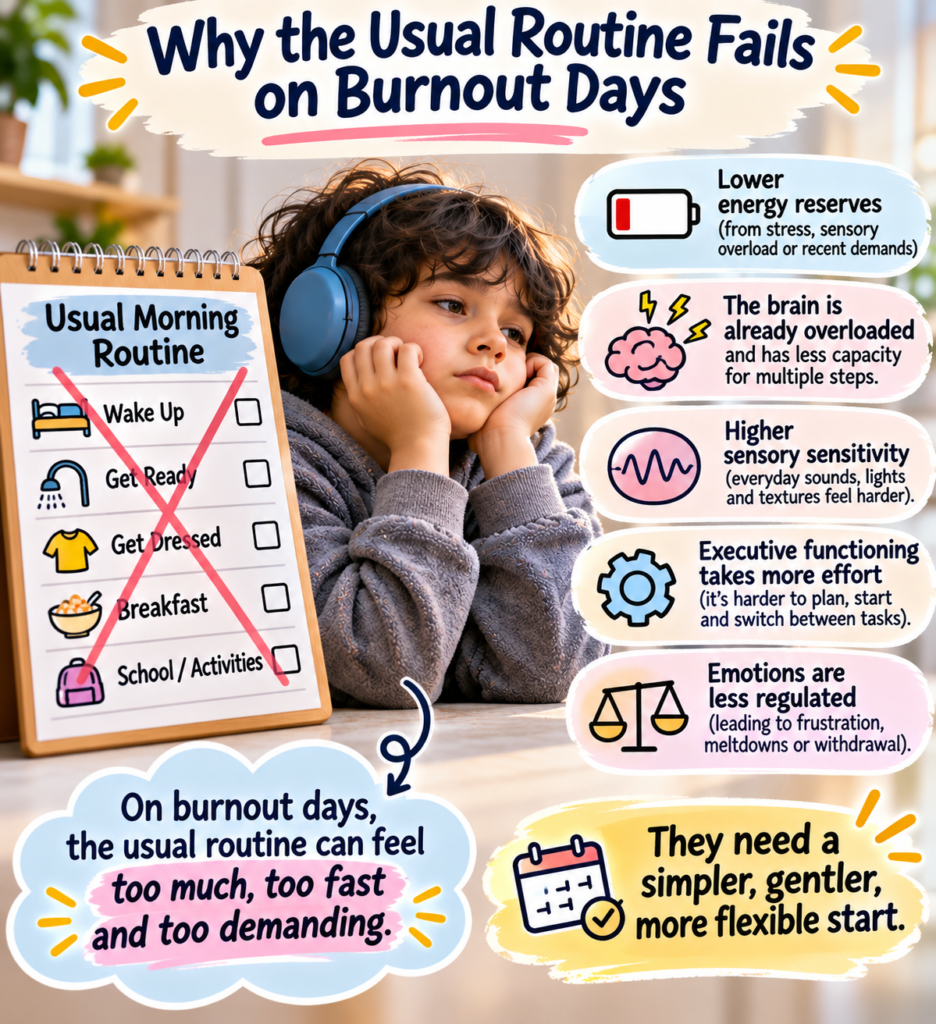
A standard morning routine is a chain of small decisions and transitions: wake, toilet, dress, eat, pack, leave. Each link costs energy. On a burnout day, your child may not have enough for the full chain, and pushing through it usually costs more later in the form of meltdowns, shutdowns or a worse tomorrow.
The problem is also decision fatigue. “What do you want for breakfast?” is an open question, and open questions are expensive. A menu turns it into a closed one: pick A, B or C.
The goal isn’t to skip the morning. It’s to lower the cost of getting through it.
The Low-Energy Menu
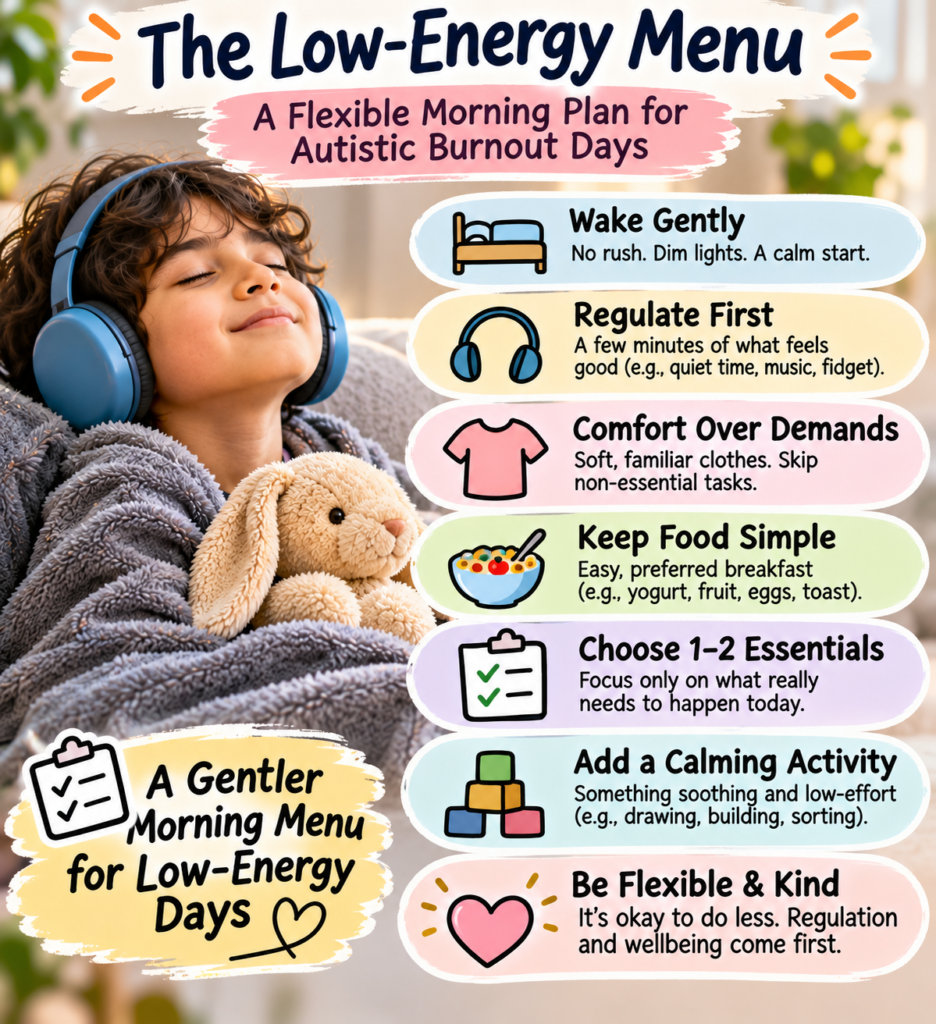
The menu is a short card with a few choices per part of the morning. Your child picks one option from each row, and every option is pre-approved by you. Customise the options to your child’s needs; these are starting points.
| Part of the morning | Full routine | Low-energy options |
|---|---|---|
| Waking up | Up and moving by a set time | Five extra quiet minutes; lights off, soft music; a blanket on the couch |
| Getting dressed | Chosen outfit, shoes, hair | Soft “safe” clothes; yesterday’s clean clothes; clothes laid out the night before |
| Breakfast | Cooked or varied meal | Safe food only; eat in bed or on the floor; drink-and-snack to go |
| Hygiene | Wash, teeth, hair | Teeth only; wipe with a cloth; skip hair today |
| Sensory | Usual noise and lights | Headphones; sunglasses; quiet seat in the car |
| Talking | Chat and questions | No questions until later; point or use cards; thumbs up or down |
| Leaving | Pack bag, shoes, out the door | Bag packed the night before; a parent carries it; arrive late or ease in |
| Recharge | None | Ten minutes alone with a favourite thing before leaving |
Write the options in words and pictures, whichever your child processes best. Keep it to one page.
Building it on a calm day
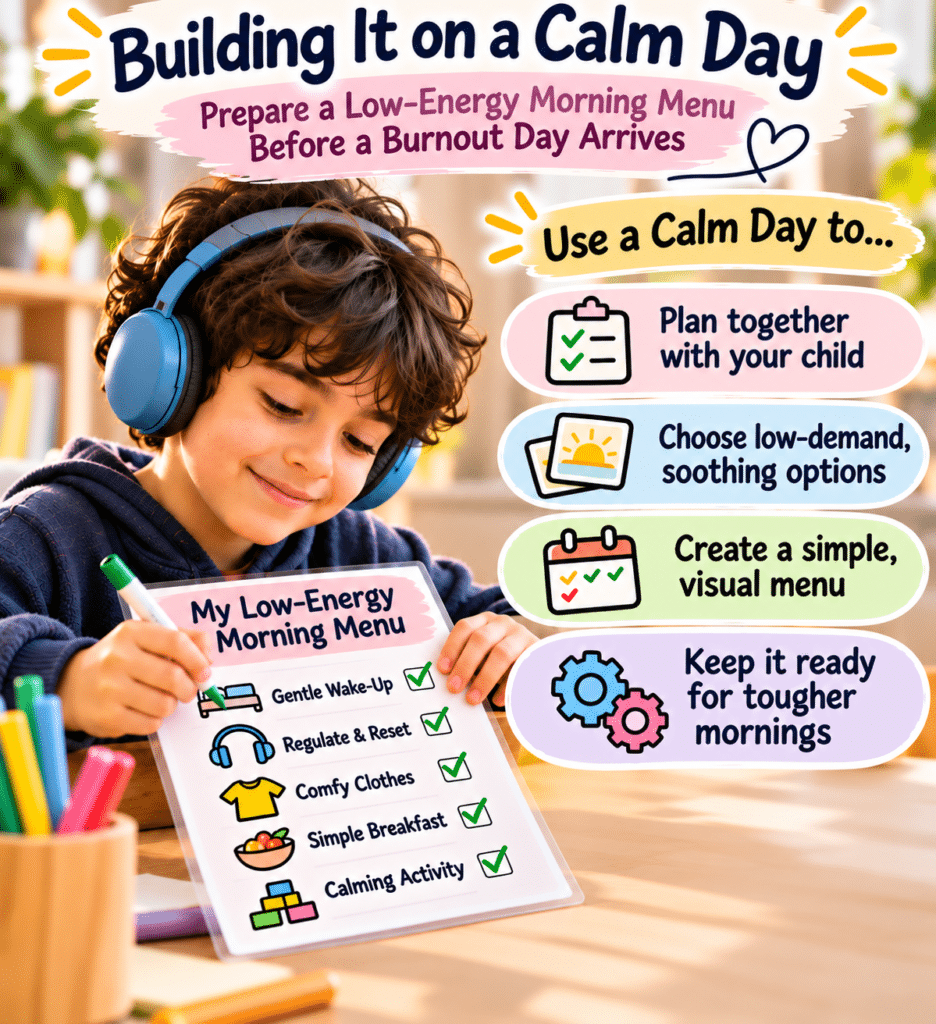
Introduce the menu when nobody is stressed. A burnout morning is the worst time to teach something new.
- Build it together. Ask what makes mornings hardest and what would make them easier. Their answers are the menu.
- Agree the signal. A colour card, a word or an emoji on the fridge that says “low-energy day.” Your child can use it without explaining, and you can offer it too.
- Set the rules once. Any option on the menu is okay, with no negotiating and no “but you did it yesterday.”
- Practise on a good day. Run through it once so the card feels familiar, not like a rescue.
- Review it every few weeks. Needs change. Add what’s working and drop what isn’t.
Keep a copy where mornings happen: the bedroom door, the fridge or the bathroom mirror.
What to say on the day
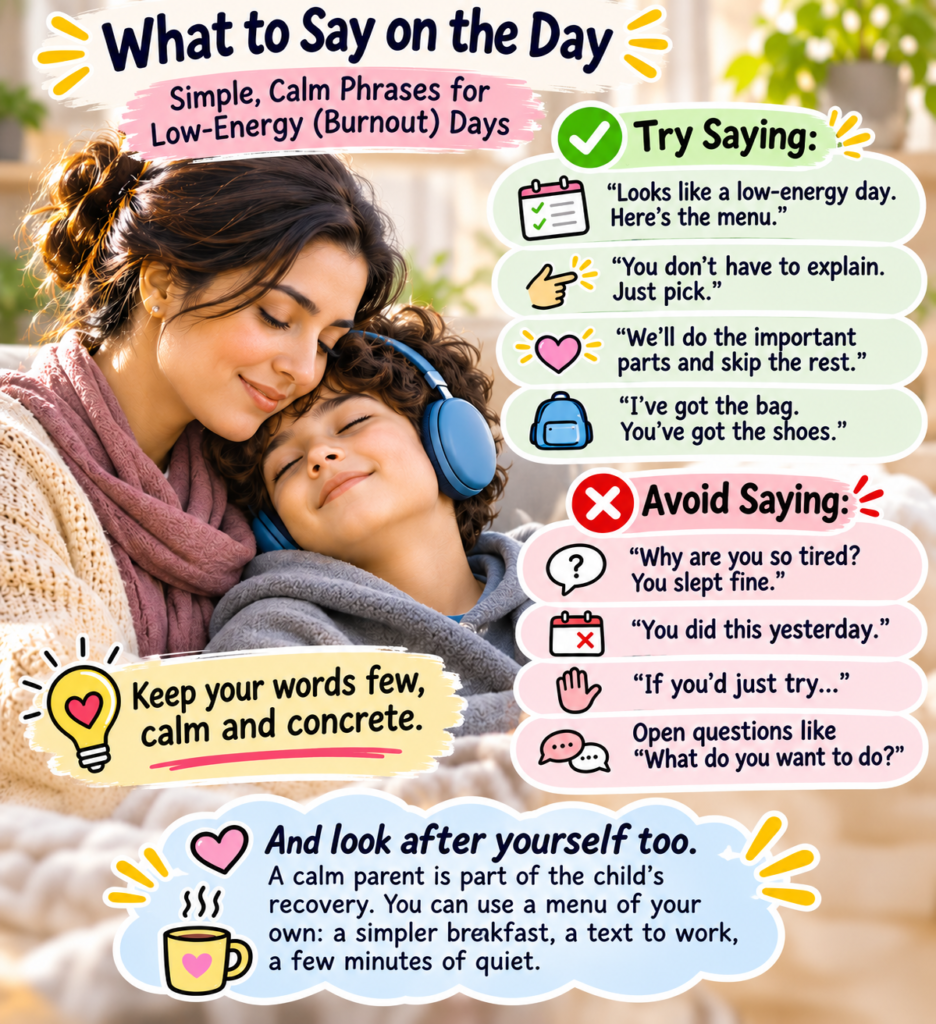
Keep your words few, calm and concrete. Your child is already spending every bit of energy they have, and extra language is extra load.
Try:
- “Looks like a low-energy day. Here’s the menu.”
- “You don’t have to explain. Just pick.”
- “We’ll do the important parts and skip the rest.”
- “I’ve got the bag. You’ve got the shoes.”
Avoid:
- “Why are you so tired? You slept fine.”
- “You did this yesterday.”
- “If you’d just try…”
- Open questions like “What do you want to do?”
And look after yourself too. A calm parent is part of the child’s recovery, and you can use a menu of your own: a simpler breakfast, a text to work, a few minutes of quiet.
When a bad morning is a pattern
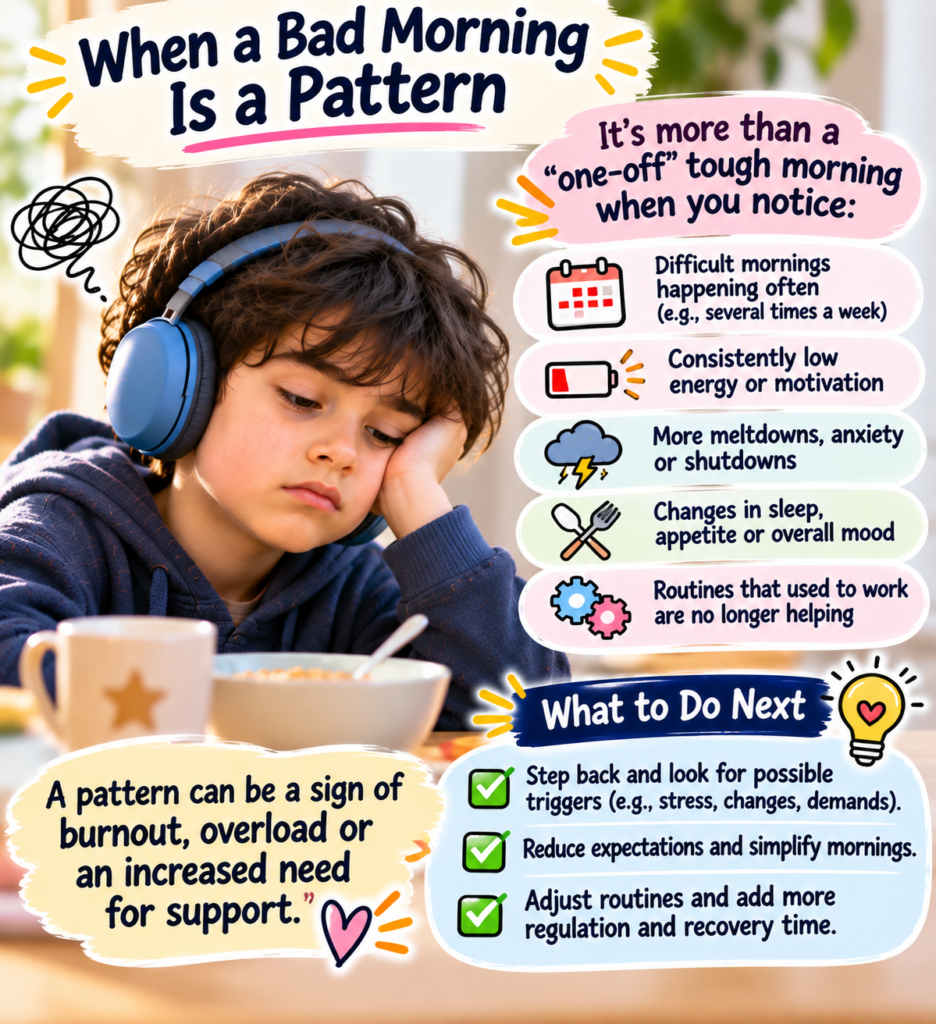
The menu helps with a rough day. It can’t fix what’s causing the burnout. If low-energy mornings are becoming most mornings, or your child is losing skills, withdrawing or avoiding school for weeks, look at the load behind it: masking, sensory demands, school pressure, too little downtime. Talk with your child’s school, doctor or an autism-informed therapist about reducing demands and building in recovery time.
The menu works because it tells your child something simple and important: you’re allowed to need less today, and I’ll help you get through it.
References
- National Autistic Society: Autistic fatigue, a guide for parents and carers
- Raymaker et al. 2020, PDXScholar
- Amaze: Autistic Burnout Parents Guide
Disclaimer:This post is general guidance, not medical advice. Every autistic child is different, so adapt it to yours.
جواب دیں