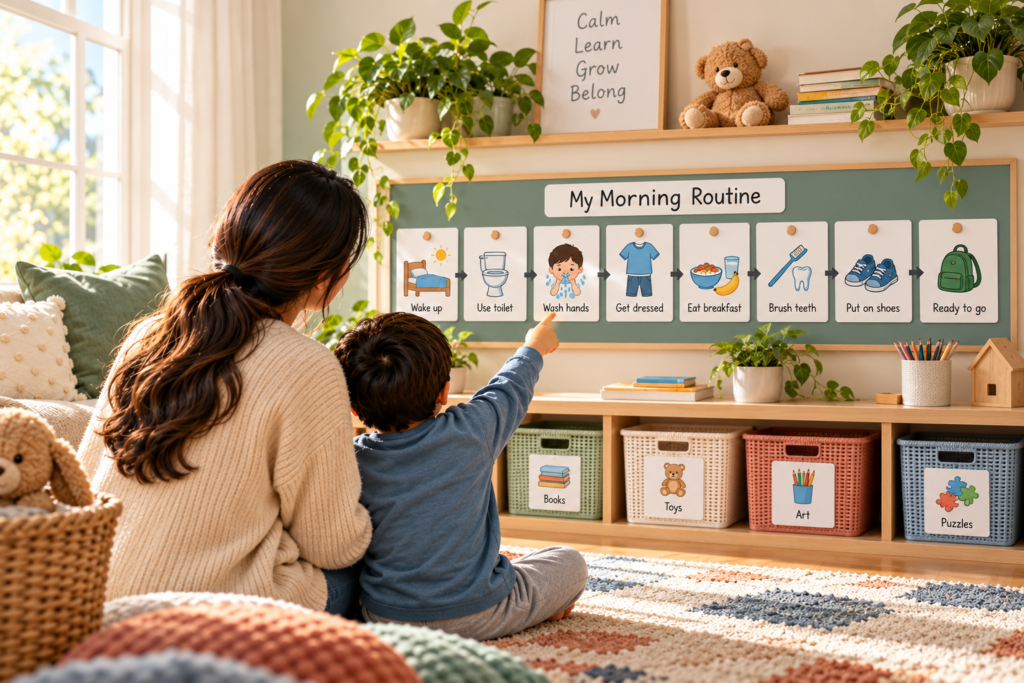
A TEACCH-inspired visual morning routine helps families create a more structured and supportive home environment for autistic children.
Every autistic child deserves a home environment where they feel safe, understood, supported and encouraged to learn at their own pace. By incorporating strategies from the TEACCH Autism Program, everyday activities such as getting dressed, brushing teeth, eating meals, playing and preparing for bedtime can become easier to understand when children know what to expect.
For some autistic children, changes in routine, spoken instructions and transitions between activities can be challenging. A predictable environment with clear visual information may help make everyday life more manageable for children and their families.
One approach parents can explore is TEACCH-inspired structured teaching. Through visual schedules, organised spaces and clearly arranged activities, families can help children understand daily expectations and participate in routines in ways that suit their individual needs.
At Autism Routine Hub, we believe that practical support begins with understanding each child. You do not need an expensive therapy room or specialised equipment to get started. Small, thoughtful changes at home can be a useful first step.
What Is the TEACCH Approach?
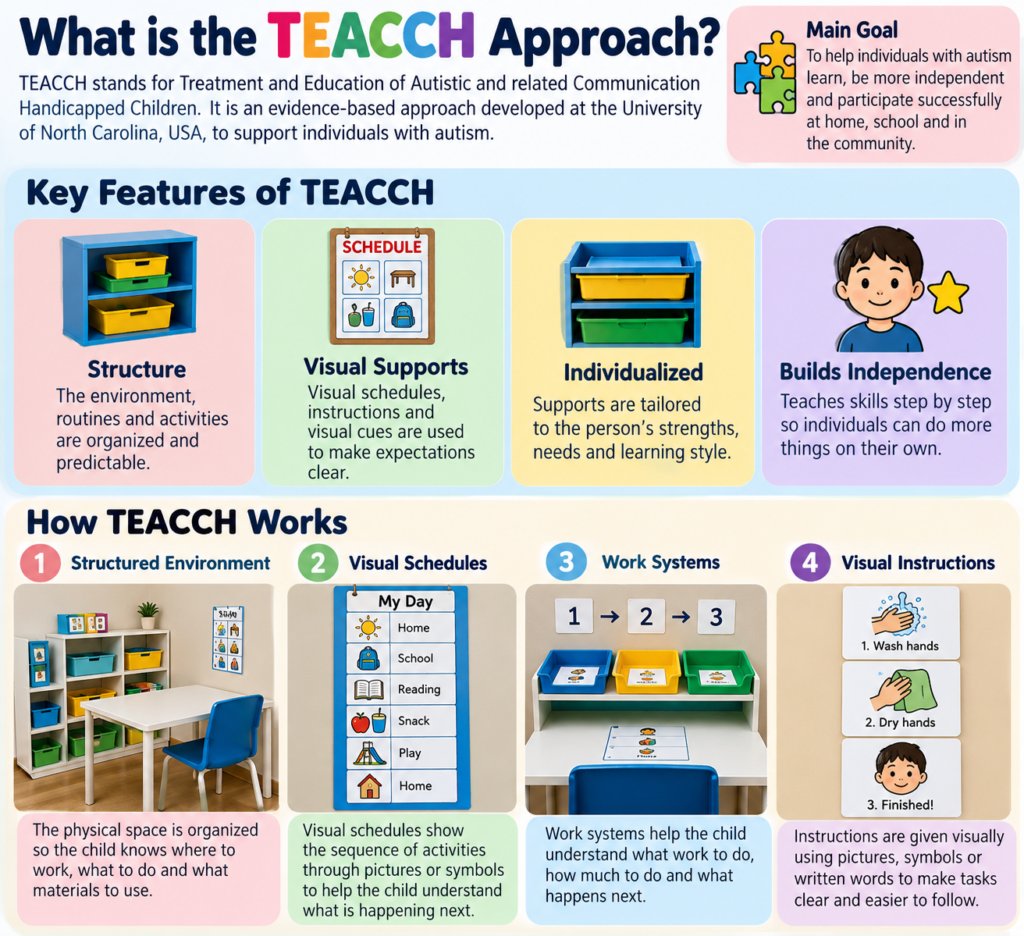
TEACCH is associated with the University of North Carolina TEACCH Autism Program. Its structured teaching approach uses visual information and organised environments to make activities more understandable for autistic people.
The approach includes four important elements:
1. Physical organisation
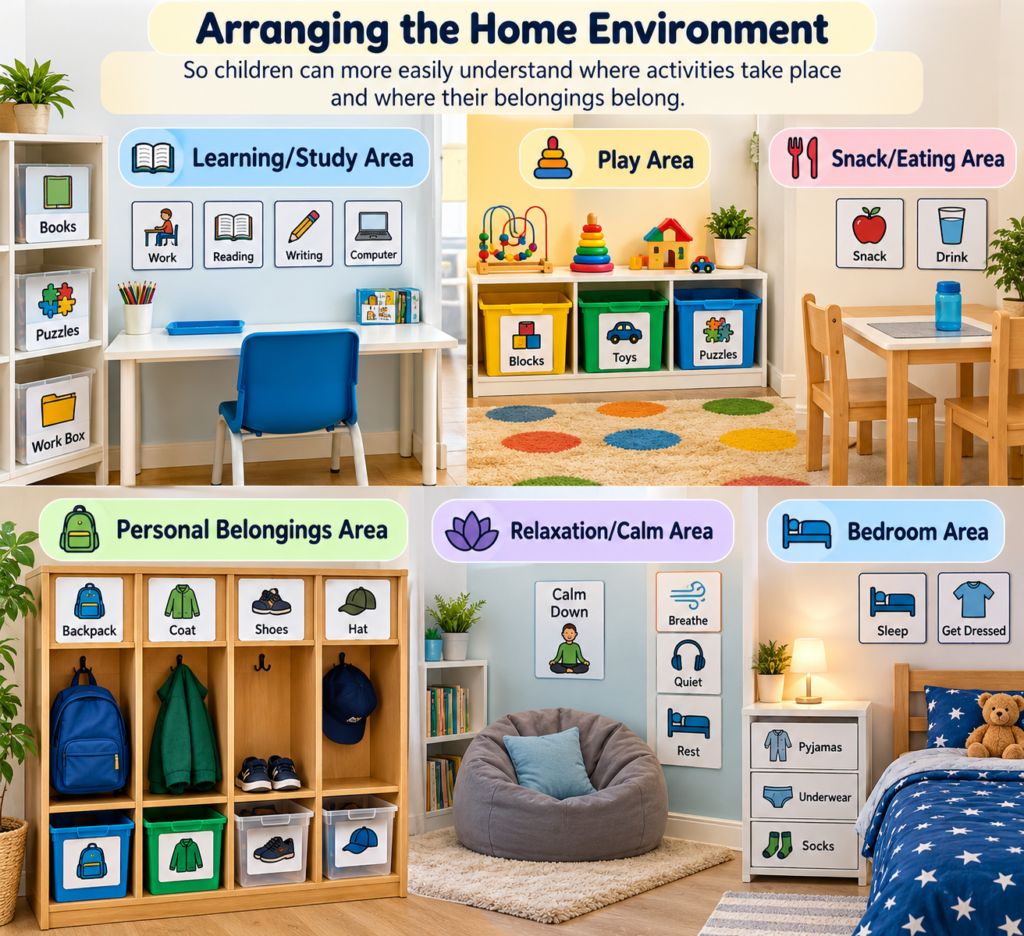
Arranging the home environment so that children can more easily understand where activities take place and where their belongings belong.
2. Individualised visual schedules
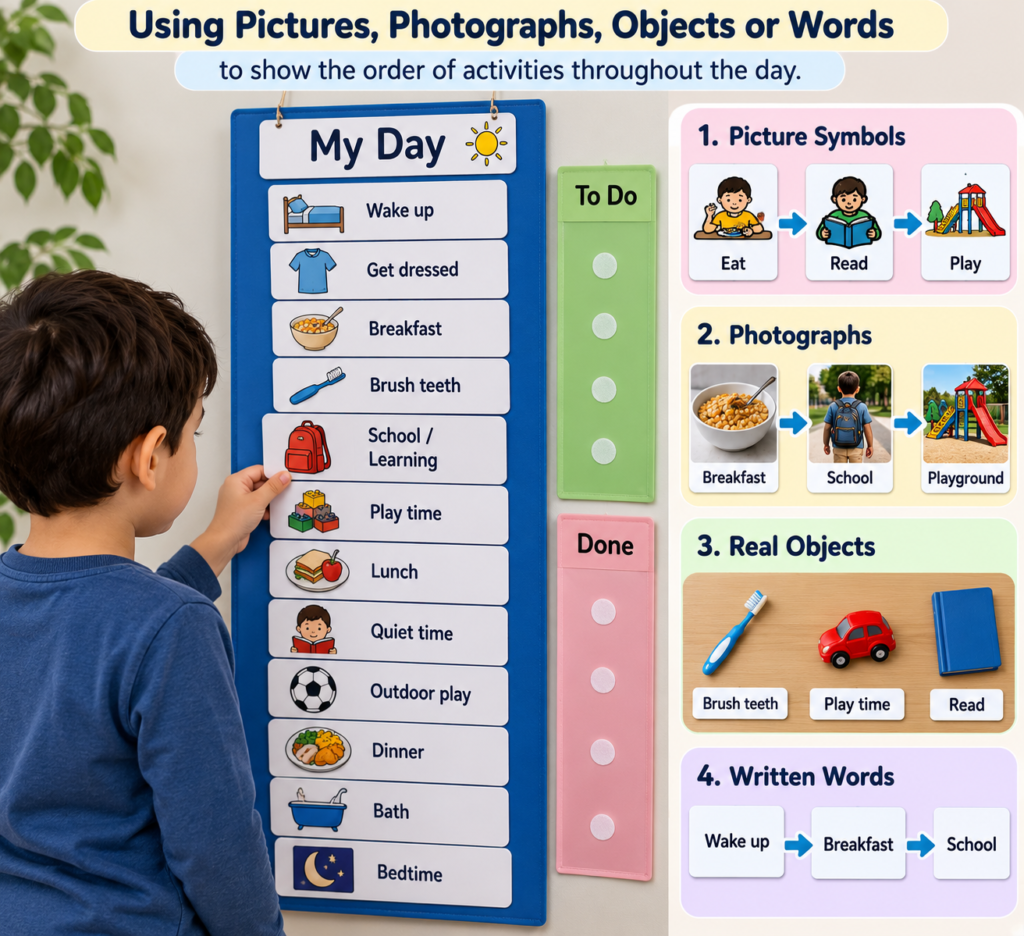
Using pictures, photographs, objects or words to show the order of activities throughout the day.
3. Work or activity systems
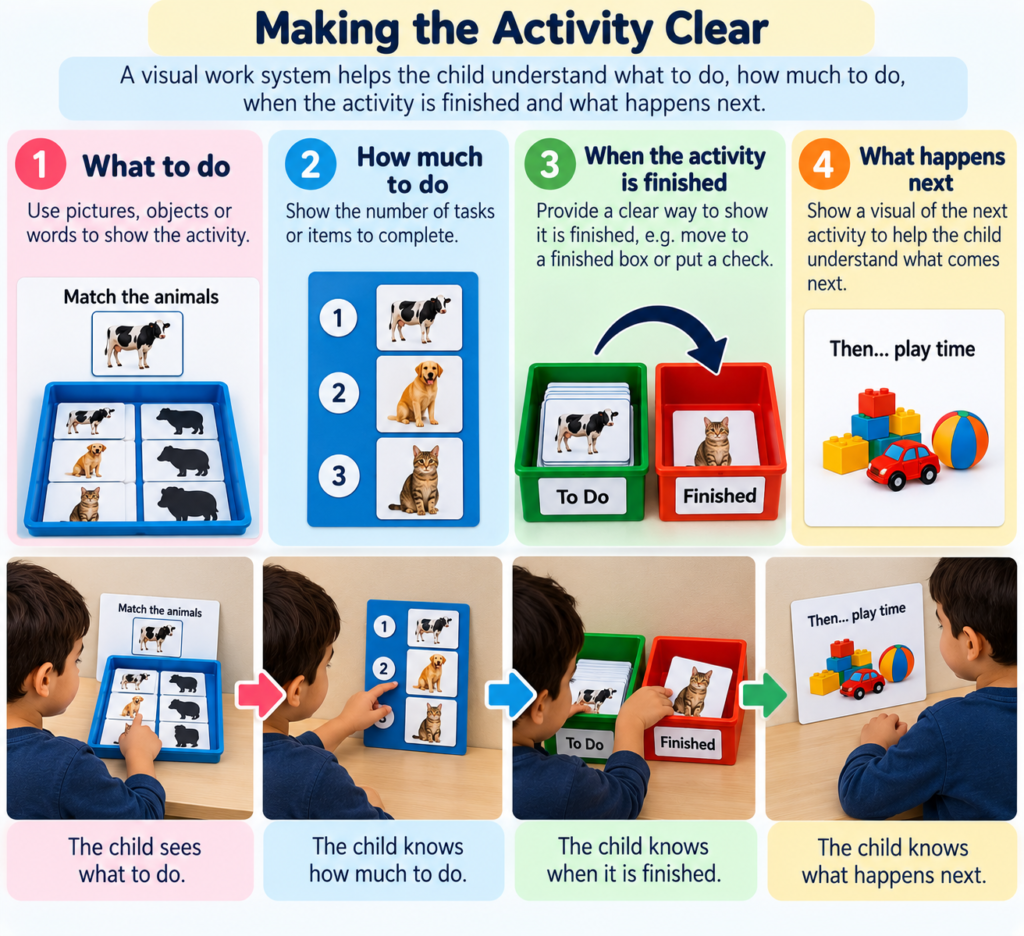
Making it clear what a child needs to do, how much they need to do, when the activity is finished and what happens next.
4. Visual structure
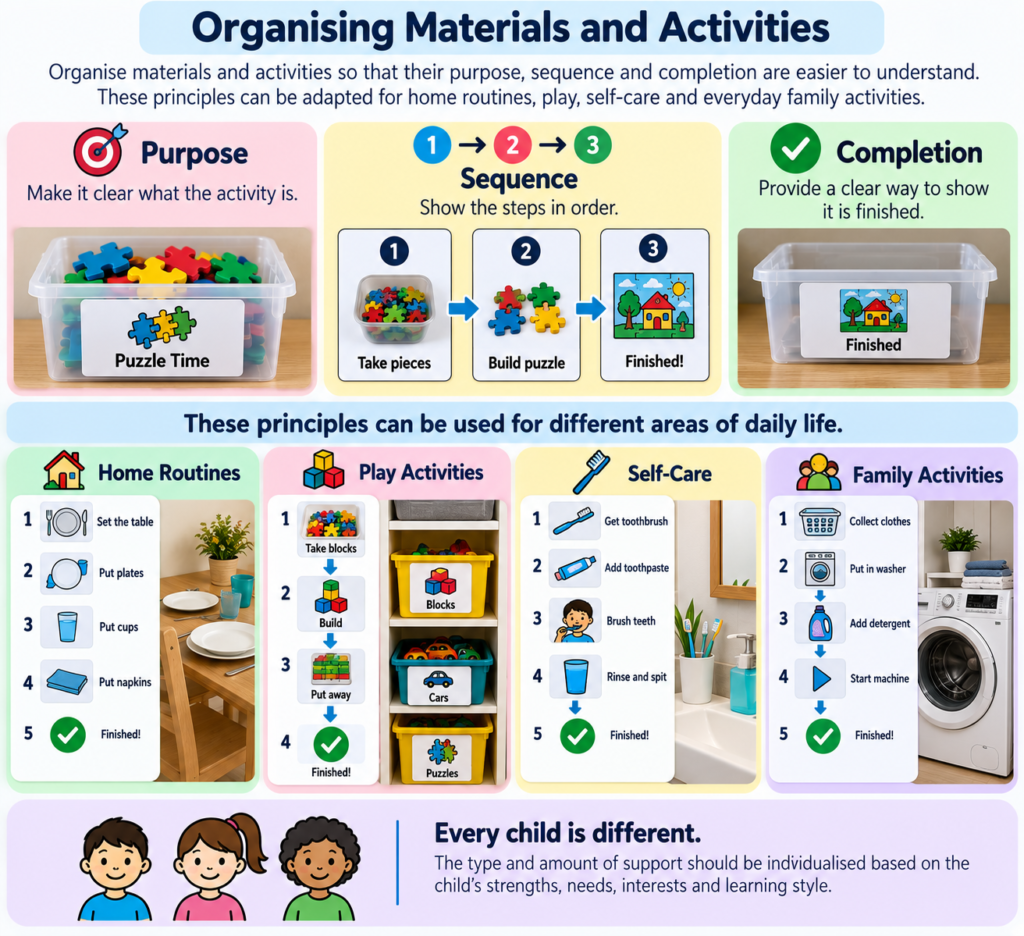
Organising materials and activities so that their purpose, sequence and completion are easier to understand.
These principles can be adapted for home routines, play, self-care and everyday family activities. Every child is different, so the type and amount of support should be individualised.
Why Are Home Routines Important for Autistic Children?
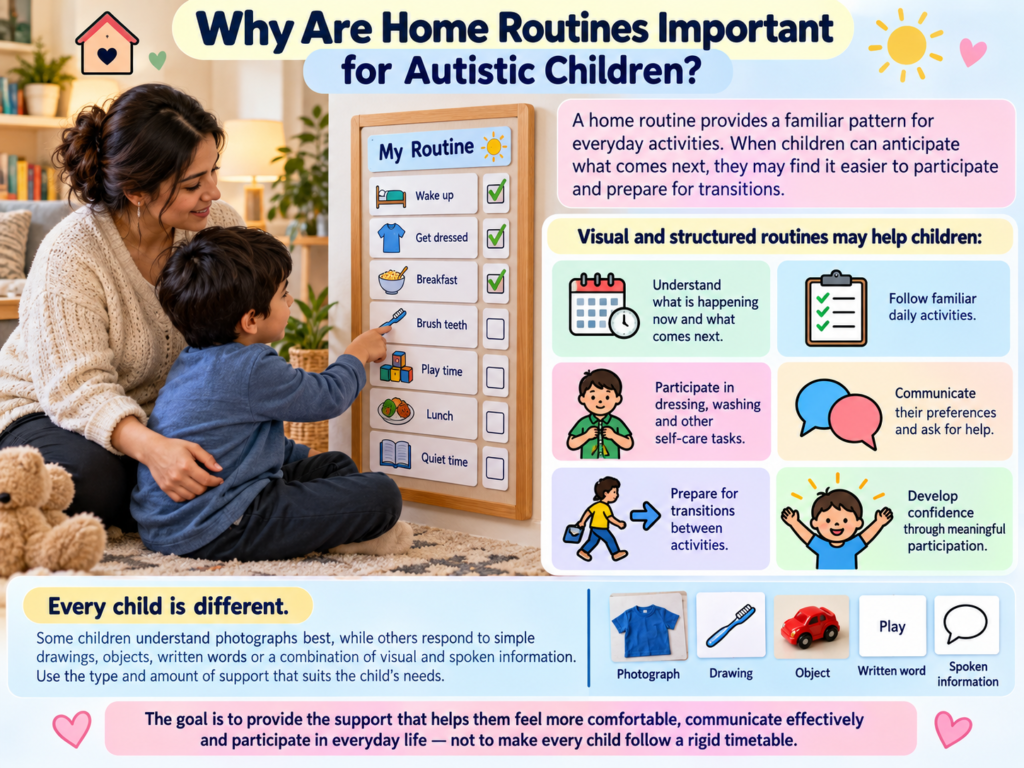
A home routine provides a familiar pattern for everyday activities. When children can anticipate what comes next, they may find it easier to participate and prepare for transitions.
Visual and structured routines may help children:
- Understand what is happening now and what comes next.
- Follow familiar daily activities.
- Participate in dressing, washing and other self-care tasks.
- Communicate their preferences and ask for help.
- Prepare for transitions between activities.
- Develop confidence through meaningful participation.
Not every child needs the same type of routine. Some children understand photographs best, while others respond to simple drawings, objects, written words or a combination of visual and spoken information.
The goal is not to make every child follow a rigid timetable. It is to provide the support that helps them feel more comfortable, communicate effectively and participate in everyday life.
1. Create an Organised and Supportive Home Environment
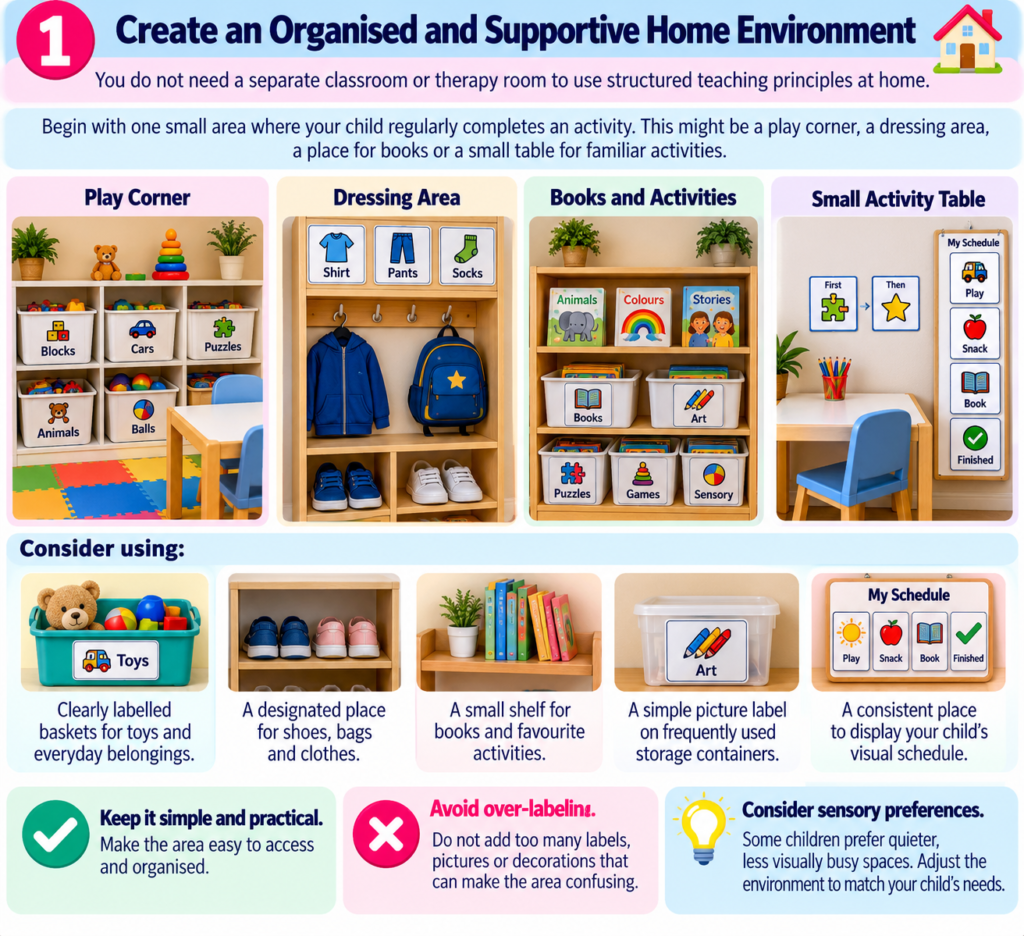
You do not need a separate classroom or therapy room to use structured teaching principles at home.
Begin with one small area where your child regularly completes an activity. This might be a play corner, a dressing area, a place for books or a small table for familiar activities.
Consider using:
- Clearly labelled baskets for toys and everyday belongings.
- A designated place for shoes, bags and clothes.
- A small shelf for books and favourite activities.
- A simple picture label on frequently used storage containers.
- A consistent place to display your child’s visual schedule.
Keep the arrangement practical and accessible. Avoid adding so many labels, pictures or decorations that the area becomes confusing.
Remember that sensory preferences differ. Some children prefer quieter, less visually busy spaces, while others enjoy colourful and stimulating environments.
Try this at home: Choose one daily activity and organise the materials your child needs in one predictable place. Observe whether this makes the activity easier to understand.
2. Use a Visual Schedule for the Morning Routine
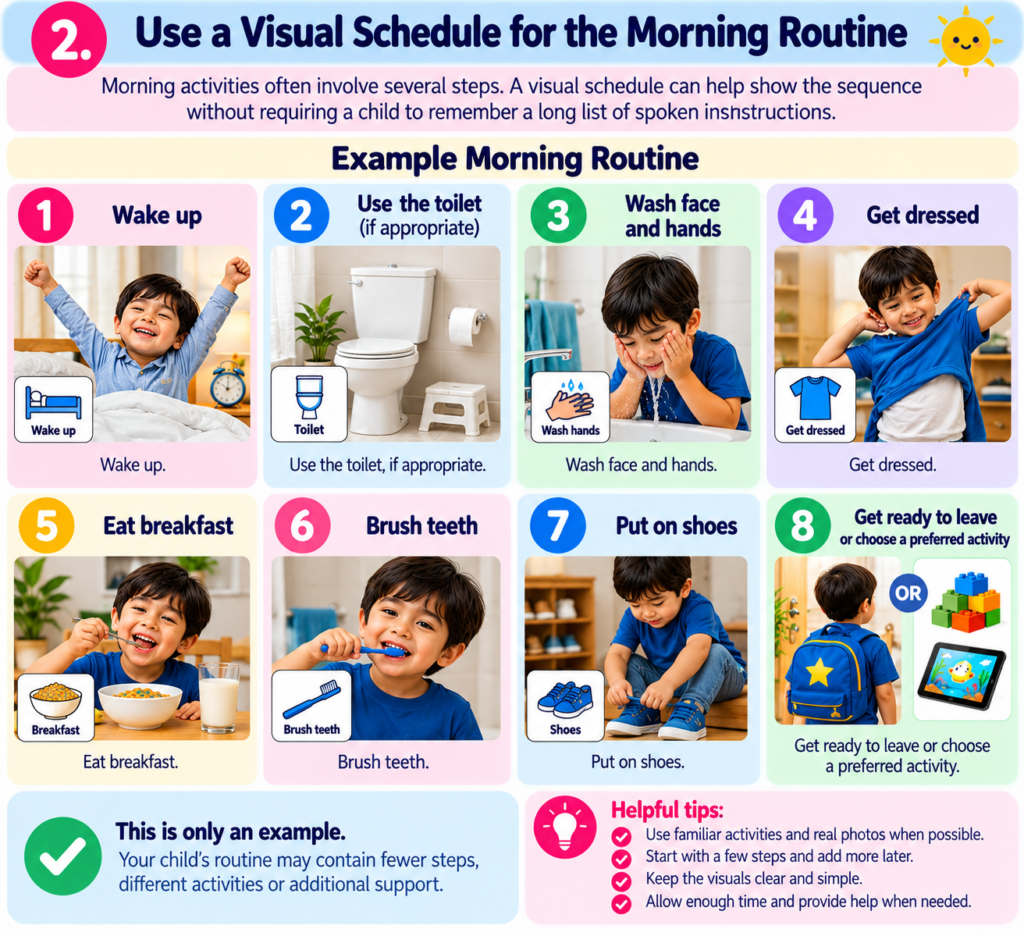
Morning activities often involve several steps. A visual schedule can help show the sequence without requiring a child to remember a long list of spoken instructions.
A sample morning routine might include:
- Wake up.
- Use the toilet, if appropriate.
- Wash face and hands.
- Get dressed.
- Eat breakfast.
- Brush teeth.
- Put on shoes.
- Get ready to leave or choose a preferred activity.
This is only an example. Your child’s routine may contain fewer steps, different activities or additional support.
How to introduce a morning schedule
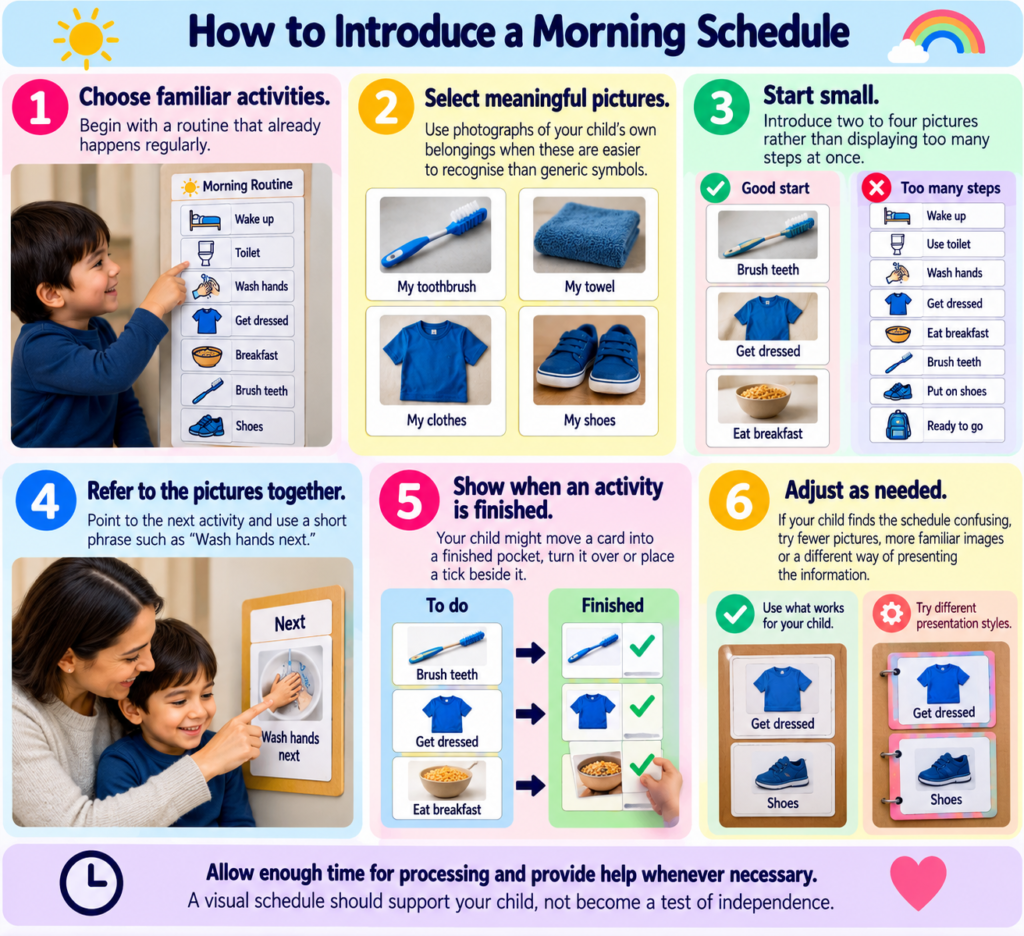
Step 1: Choose familiar activities. Begin with a routine that already happens regularly.
Step 2: Select meaningful pictures. Use photographs of your child’s own belongings when these are easier to recognise than generic symbols.
Step 3: Start small. Introduce two to four pictures rather than displaying too many steps at once.
Step 4: Refer to the pictures together. Point to the next activity and use a short phrase such as “Wash hands next.”
Step 5: Show when an activity is finished. Your child might move a card into a finished pocket, turn it over or place a tick beside it.
Step 6: Adjust as needed. If your child finds the schedule confusing, try fewer pictures, more familiar images or a different way of presenting the information.
Allow enough time for processing and provide help whenever necessary. A visual schedule should support your child, not become a test of independence.
3. Break Self-Care Activities into Manageable Steps
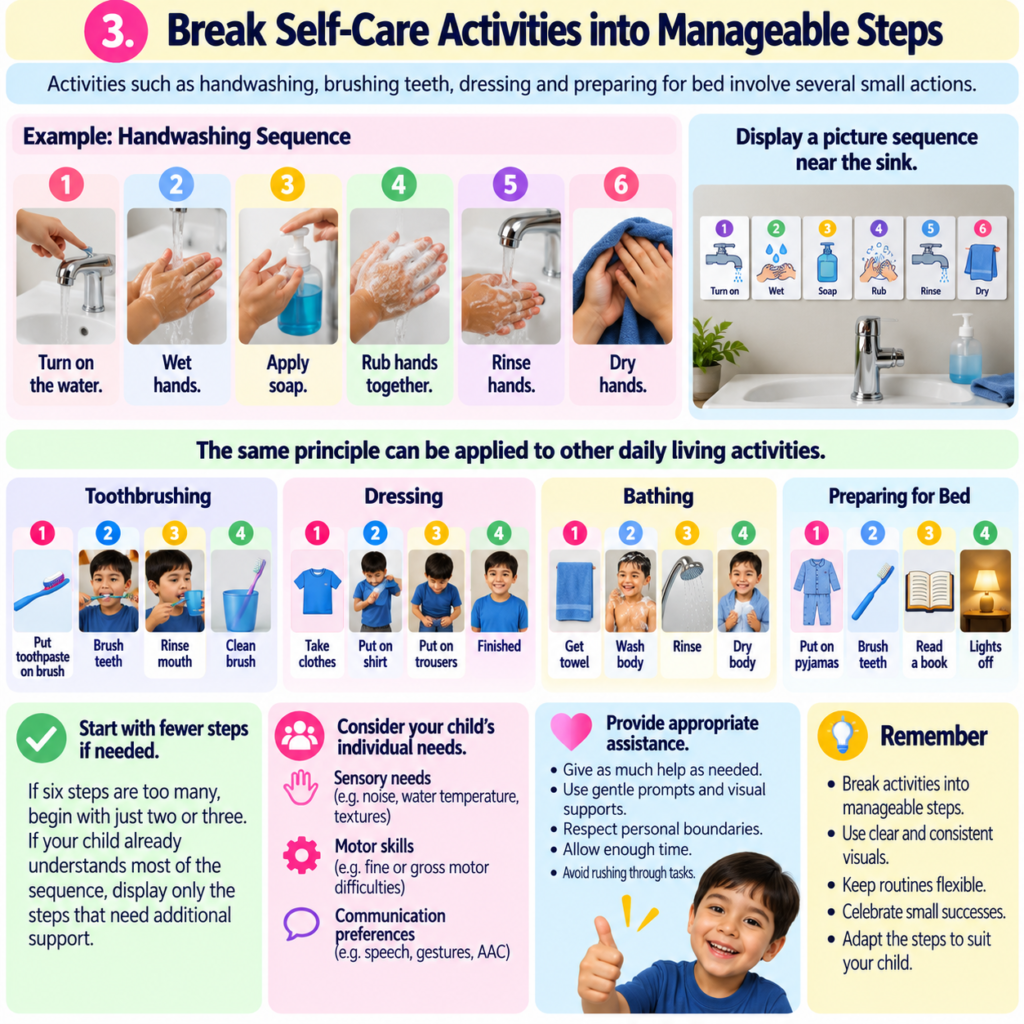
Activities such as handwashing, brushing teeth, dressing and preparing for bed involve several small actions.
For example, a handwashing sequence could include:
- Turn on the water.
- Wet hands.
- Apply soap.
- Rub hands together.
- Rinse hands.
- Dry hands.
A picture sequence near the sink may help a child understand what comes next.
If six steps are too many, begin with just two or three. If your child already understands most of the sequence, display only the steps that need additional support.
The same principle can be applied to dressing, toothbrushing, bathing and other daily living activities.
Consider your child’s sensory needs, motor skills and communication preferences. Provide appropriate assistance, respect personal boundaries and avoid rushing through tasks.
4. Make Transitions Easier with a First–Then Board
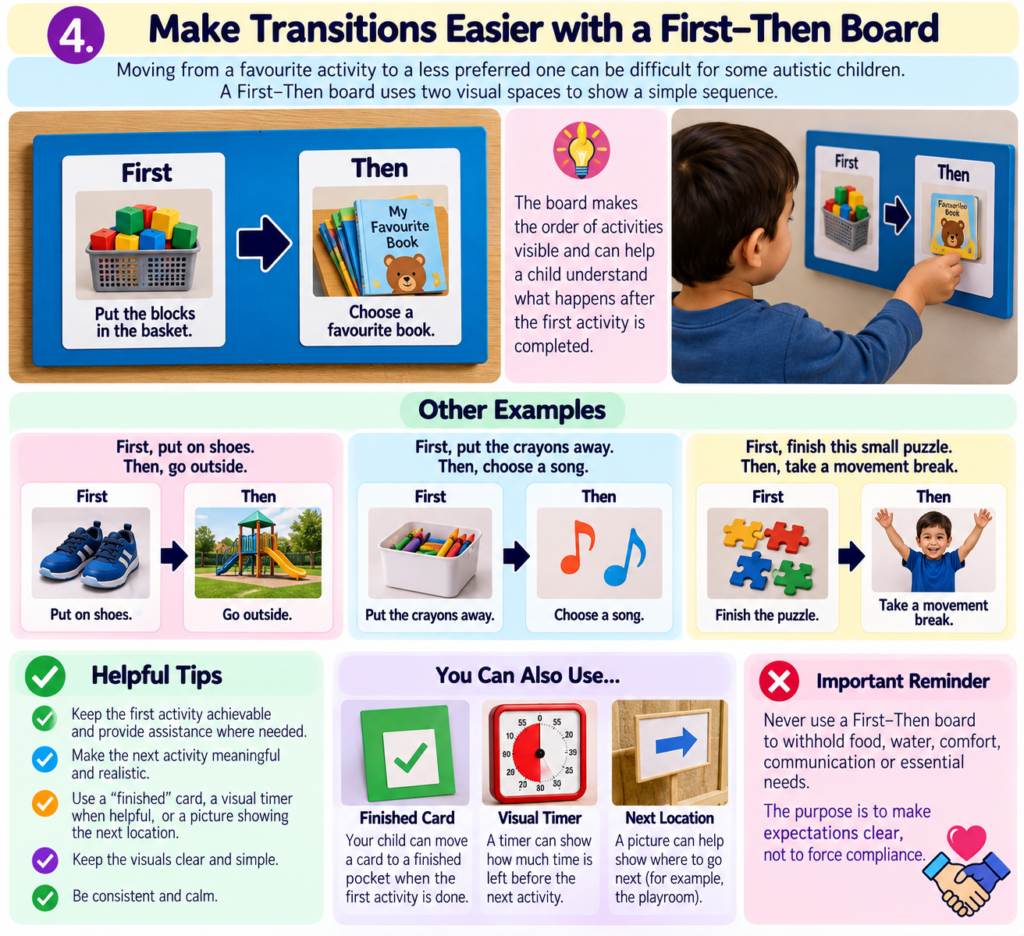
Moving from a favourite activity to a less preferred one can be difficult for some autistic children.
A First–Then board uses two visual spaces to show a simple sequence.
FIRST: Put the blocks in the basket.
THEN: Choose a favourite book.
The board makes the order of activities visible and can help a child understand what happens after the first activity is completed.
Other examples include:
- First, put on shoes. Then, go outside.
- First, put the crayons away. Then, choose a song.
- First, finish this small puzzle. Then, take a movement break.
Keep the first activity achievable and provide assistance where needed. Make the next activity meaningful and realistic.
You can also use a “finished” card, a visual timer when helpful, or a picture showing the next location.
Never use a First–Then board to withhold food, water, comfort, communication or essential needs. The purpose is to make expectations clearer, not to force compliance.
5. Set Up a Simple Activity System
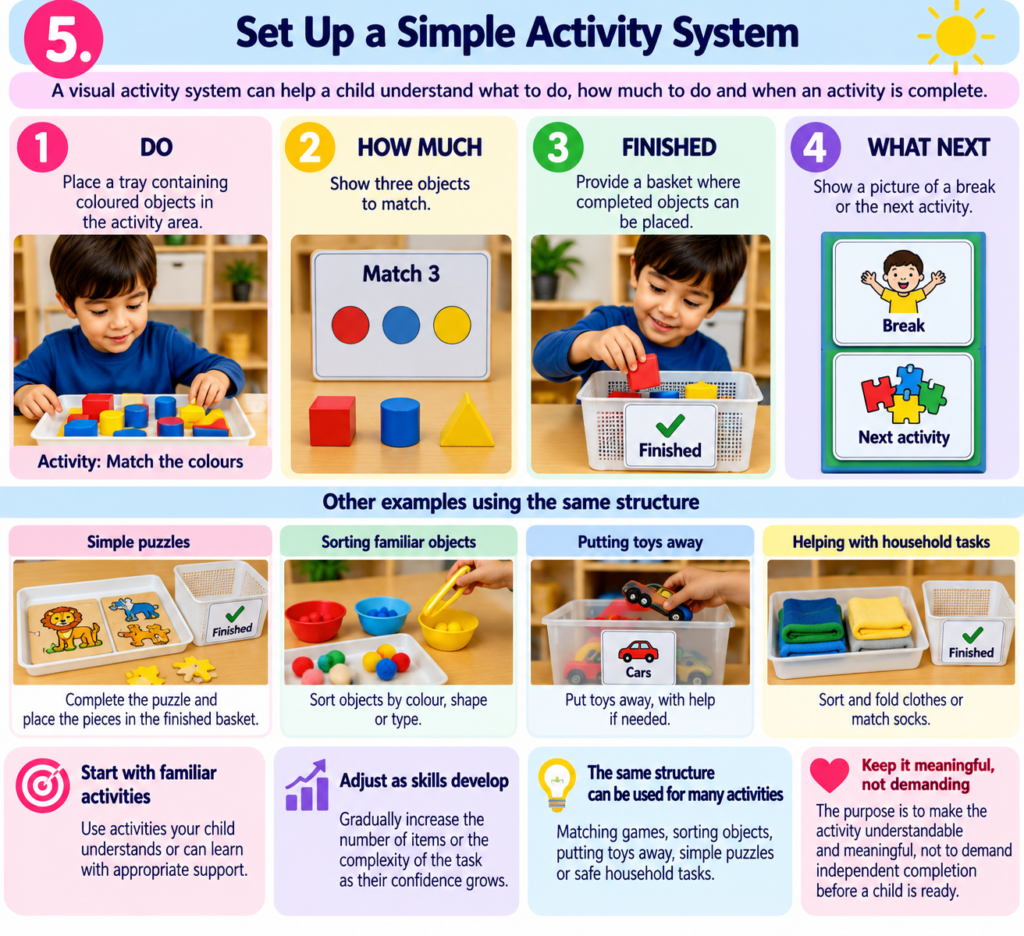
A visual activity system can help a child understand what to do, how much to do and when an activity is complete.
Imagine a child who enjoys matching colours.
DO: Place a tray containing coloured objects in the activity area.
HOW MUCH: Show three objects to match.
FINISHED: Provide a basket where completed objects can be placed.
WHAT NEXT: Show a picture of a break or the next activity.
The same structure can be used for simple puzzles, matching games, sorting familiar objects, putting toys away or helping with safe household tasks.
Start with activities your child understands or can learn with appropriate support. Gradually adjust the task as their skills and confidence develop.
The purpose is to make the activity understandable and meaningful, not to demand independent completion before a child is ready.
6. Establish a Predictable Evening Routine
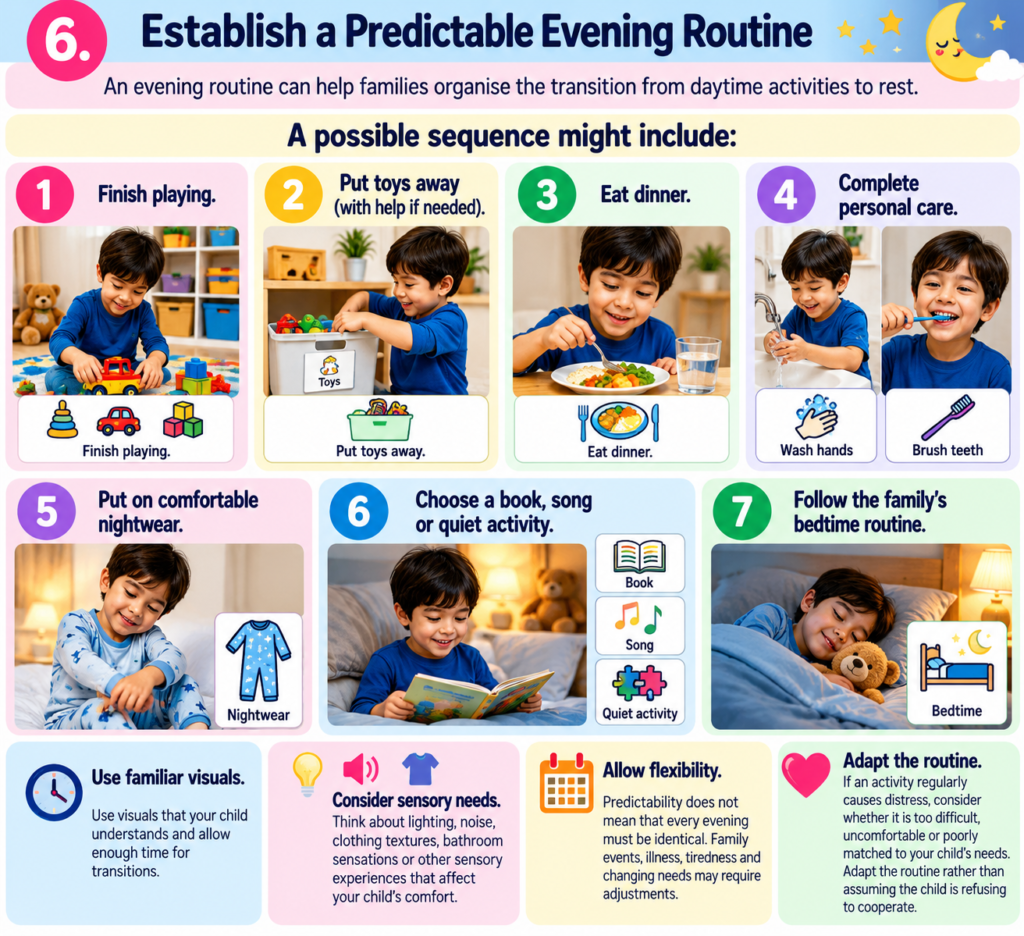
An evening routine can help families organise the transition from daytime activities to rest.
A possible sequence might include:
- Finish playing.
- Put toys away, with help if needed.
- Eat dinner.
- Complete personal care.
- Put on comfortable nightwear.
- Choose a book, song or quiet activity.
- Follow the family’s bedtime routine.
Use visuals that your child understands and allow enough time for transitions.
Consider whether lighting, noise, clothing textures, bathroom sensations or other sensory experiences affect your child’s comfort.
Predictability does not mean that every evening must be identical. Family events, illness, tiredness and changing needs may require adjustments.
If an activity regularly causes distress, consider whether it is too difficult, uncomfortable or poorly matched to your child’s needs. Adapt the routine rather than assuming that the child is simply refusing to cooperate.
7. Respect Sensory Needs and Communication
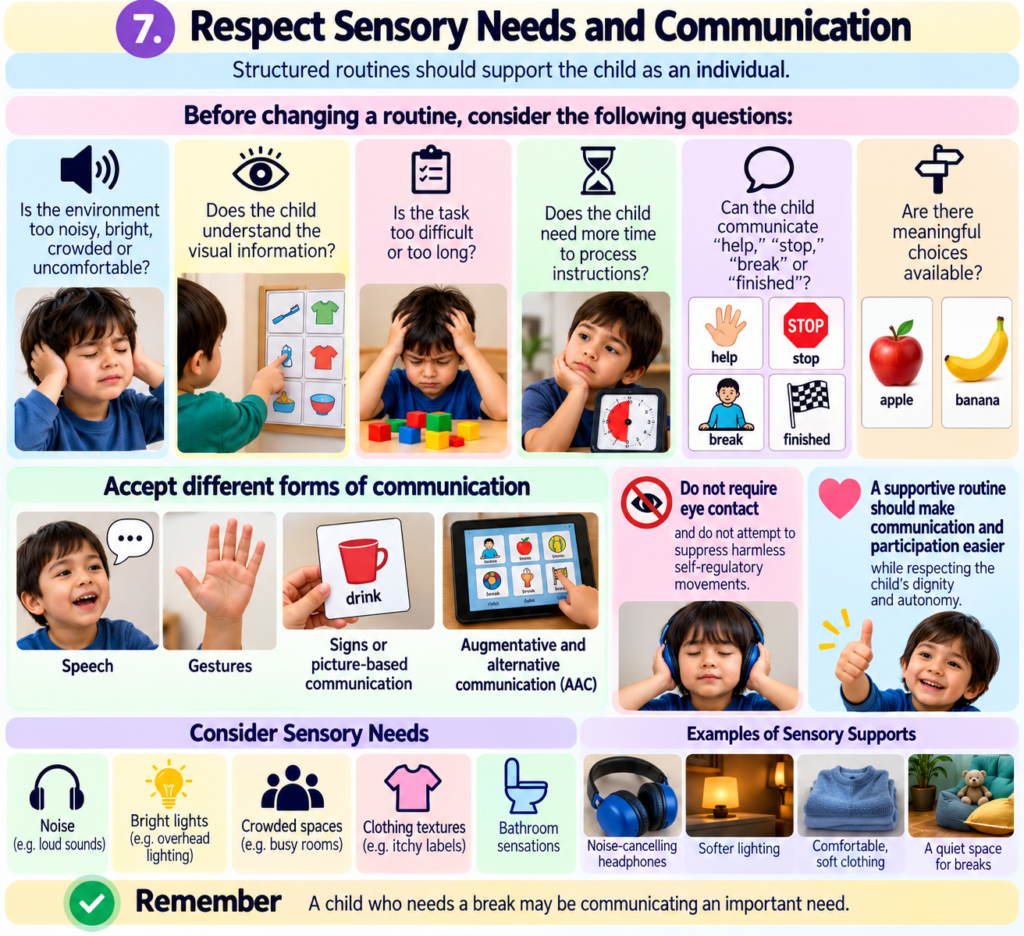
Structured routines should support the child as an individual.
Before changing a routine, consider the following questions:
- Is the environment too noisy, bright, crowded or uncomfortable?
- Does the child understand the visual information?
- Is the task too difficult or too long?
- Does the child need more time to process instructions?
- Can the child communicate “help,” “stop,” “break” or “finished”?
- Are there meaningful choices available?
Accept different forms of communication, including speech, gestures, signs, picture-based communication and augmentative and alternative communication (AAC).
Do not require eye contact or attempt to suppress harmless self-regulatory movements. A child who needs a break may be communicating an important need.
A supportive routine should make communication and participation easier while respecting the child’s dignity and autonomy.
8. What If Your Child Does Not Follow the Schedule?
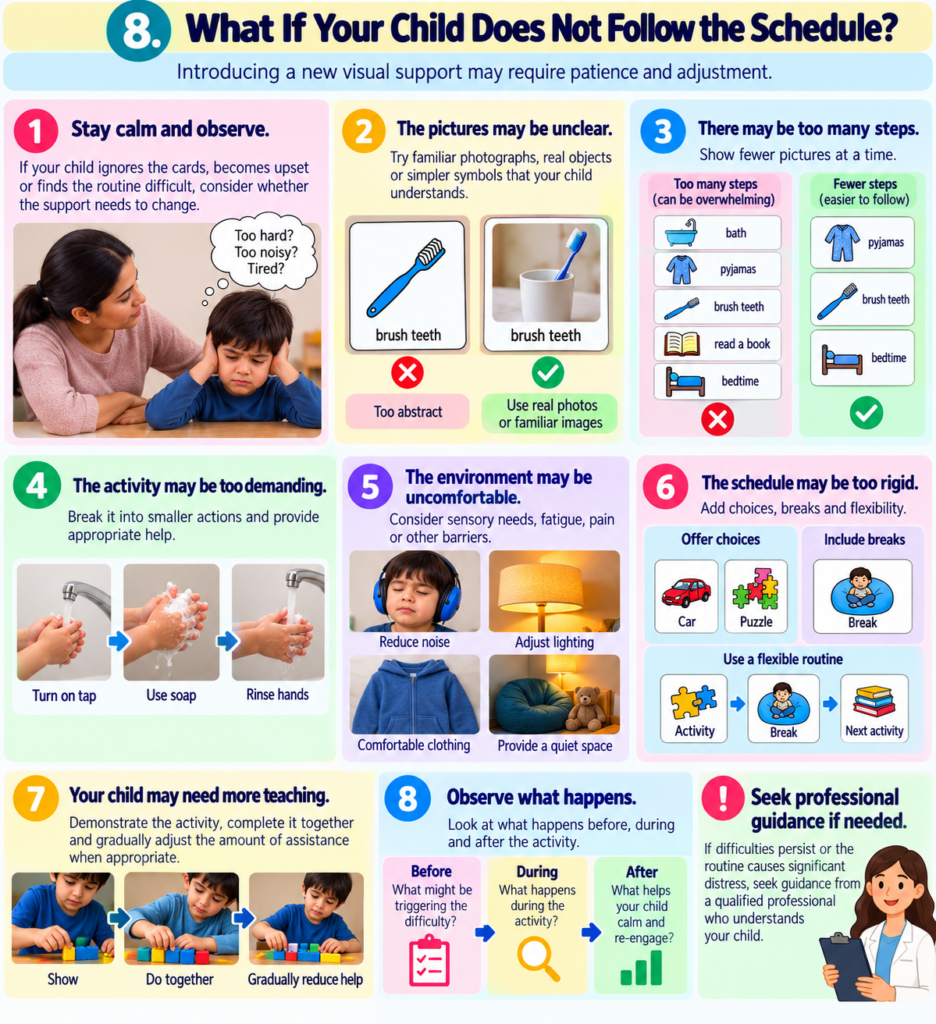
Introducing a new visual support may require patience and adjustment.
If your child ignores the cards, becomes upset or finds the routine difficult, consider whether the support needs to change.
The pictures may be unclear. Try familiar photographs, objects or simpler symbols.
There may be too many steps. Show fewer pictures at a time.
The activity may be too demanding. Break it into smaller actions and provide appropriate help.
The environment may be uncomfortable. Consider sensory needs, fatigue, pain or other barriers.
The schedule may be too rigid. Add choices, breaks and flexibility.
Your child may need more teaching. Demonstrate the activity, complete it together and gradually adjust the amount of assistance when appropriate.
Observe what happens before, during and after the activity. If difficulties persist or the routine causes significant distress, seek guidance from a qualified professional who understands your child.
9. A Simple Seven-Day Plan to Get Started
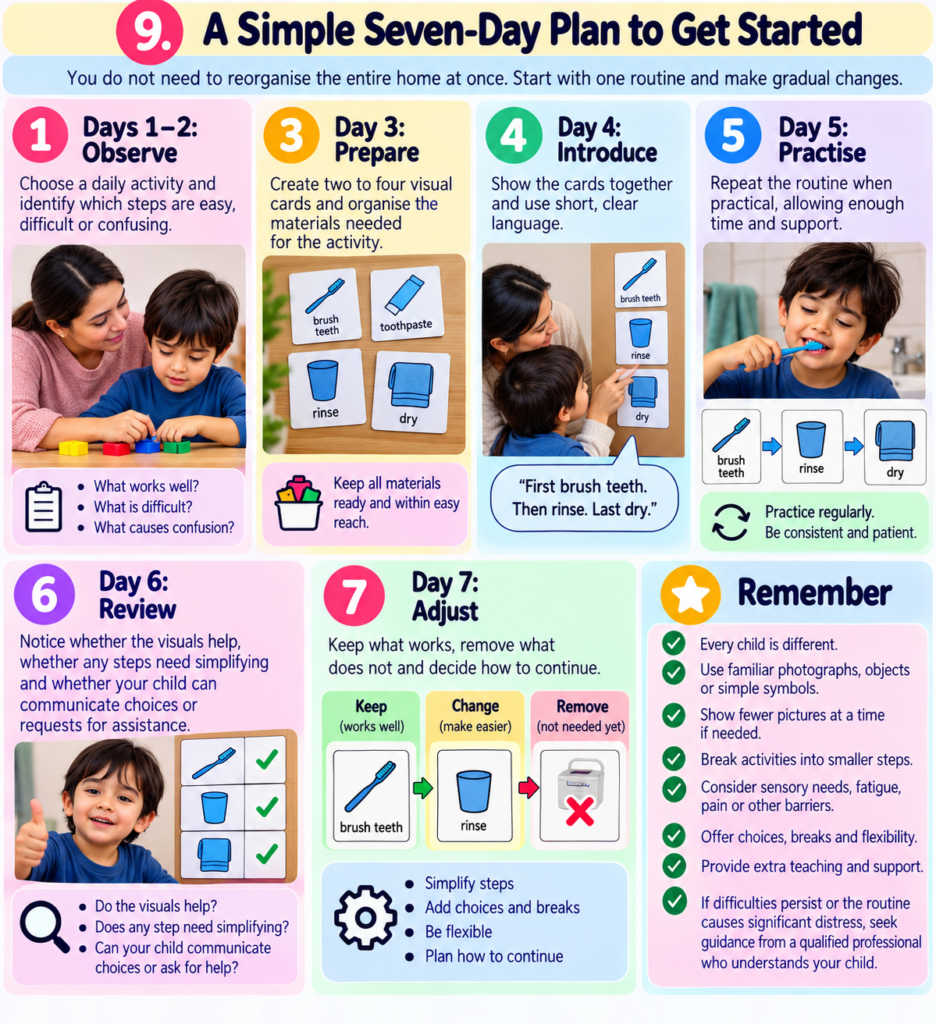
You do not need to reorganise the entire home at once. Start with one routine and make gradual changes.
Days 1–2: Observe
Choose a daily activity and identify which steps are easy, difficult or confusing.
Day 3: Prepare
Create two to four visual cards and organise the materials needed for the activity.
Day 4: Introduce
Show the cards together and use short, clear language.
Day 5: Practise
Repeat the routine when practical, allowing enough time and support.
Day 6: Review
Notice whether the visuals help, whether any steps need simplifying and whether your child can communicate choices or requests for assistance.
Day 7: Adjust
Keep what works, remove what does not and decide how to continue.
Progress may mean recognising the next step, communicating a preference, accepting assistance more comfortably or participating in one part of an activity.
Every meaningful step counts.
10. Download Your Home Routine Resources
At Autism Routine Hub, we believe that parents and caregivers should have access to practical, easy-to-use educational resources.
A printable home-routine kit can help you begin using these ideas without having to design every visual from scratch.
Useful materials include:
- A morning routine chart.
- Cut-out activity cards.
- A First–Then board.
- A simple activity system showing “Do,” “How much,” “Finished” and “Next.”
- A parent guide for adapting routines to individual needs.
Choose the pages that suit your child, print the relevant cards and introduce only a few visuals at a time.
You can personalise the materials with photographs of familiar objects and activities. Keep small pieces and attachment materials safely out of reach when necessary.
[Download the Autism Routine Hub Home Routine Kit]
These materials are original educational resources inspired by structured teaching principles. They are not an official TEACCH® publication and do not replace individualised professional advice.
Frequently Asked Questions
Does every autistic child need a visual schedule?
No. Visual schedules can be helpful for some children, but the format and amount of support should depend on the individual. Some children understand photographs or objects best, while others prefer written words, gestures, audio cues or a combination.
Can I use TEACCH-inspired strategies at home without special equipment?
Yes. You can begin with familiar objects, paper cards, photographs and clearly organised materials. Professional guidance may be helpful when your child has complex needs or when a routine is difficult to establish.
Should the routine remain exactly the same every day?
Predictability can be useful, but routines should allow for real-life changes and individual preferences. Explain changes in ways your child understands and provide preparation when possible.
What age group can use these routines?
The ideas can be adapted for different ages. Choose visuals, activities and expectations according to the individual’s communication, developmental level, interests and support needs.
Is this an official TEACCH programme?
No. This article provides educational information inspired by structured teaching principles. The TEACCH® Autism Program is associated with the University of North Carolina. This resource is not an official programme, certification or clinical intervention.
Final Thoughts
A supportive home routine is not about creating a perfect timetable. It is about making everyday life more understandable, accessible and manageable for the child and family.
Start with one activity. Use visuals your child understands. Offer choices, allow time, respect sensory needs and celebrate meaningful participation.
Small changes can create opportunities for communication, confidence and growing independence.
At اوٹوپین روٹین ہب, we believe that every autistic person deserves individualised support, dignity and the opportunity to participate in everyday life in ways that work for them.
This article is for educational purposes and is not a substitute for individualised professional advice.
Further Reading
- UNC TEACCH Autism Program: https://teacch.com/about-us/
- TEACCH Autism Program training: https://teacch.com/trainings/certification/
جواب دیں