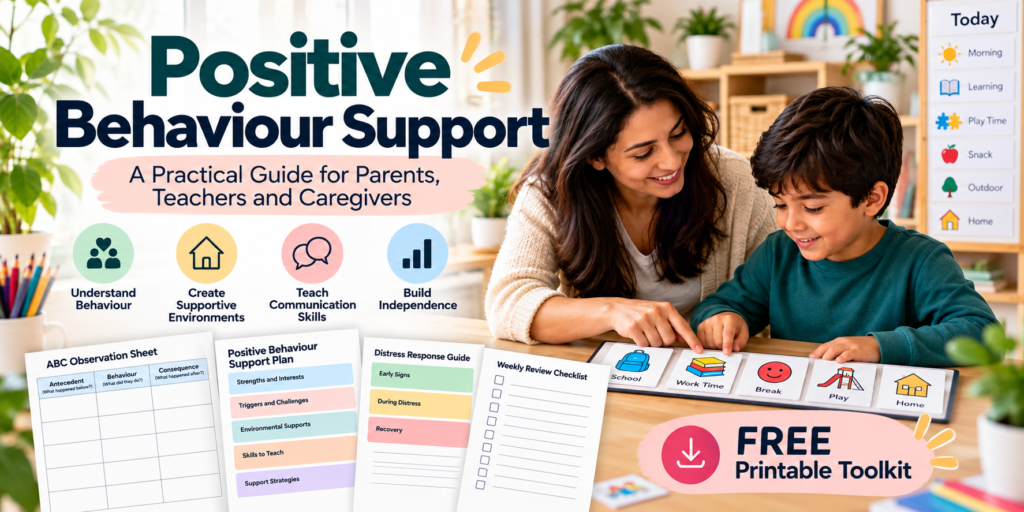
Positive Behaviour Support (PBS) offers a compassionate, practical approach to understanding why behaviour occurs. As outlined by the Association for Positive Behavior Support, this framework focuses on identifying proactive ways to improve a person’s quality of life.
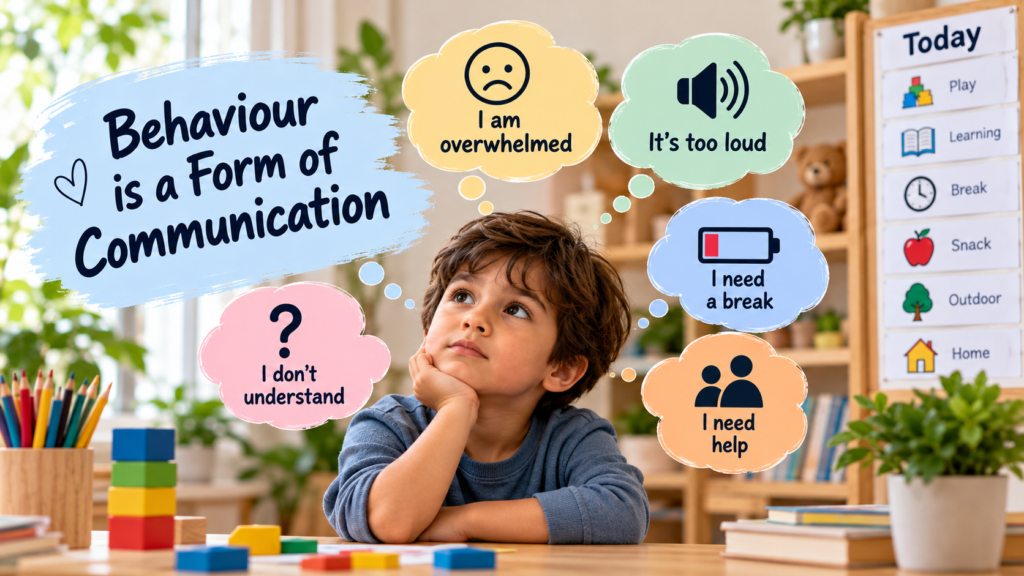
Behaviour is a form of communication. When a child or adult experiences distress, refuses a task, becomes overwhelmed or struggles to participate in everyday activities, it is important to look beyond the behaviour itself.
Positive Behaviour Support (PBS) offers a compassionate, practical approach to understanding why behaviour occurs and identifying ways to improve a person’s quality of life.
Rather than focusing on punishment or trying to make someone comply, positive behaviour support helps us understand their needs, reduce barriers, develop useful skills and create environments where they can feel safe, respected and supported.
In this guide, we will explore what positive behaviour support means, how it works in everyday life and how families and educators can begin using it.
What Is Positive Behaviour Support?
Positive Behaviour Support is an evidence-informed approach that combines understanding behaviour, improving the environment, teaching meaningful skills and supporting a person’s wellbeing.
It is based on the understanding that behaviour often serves a purpose. A person may be trying to communicate discomfort, request help, escape an overwhelming situation, gain access to something important or express a need they cannot communicate in another way.
PBS aims to understand that purpose and address it in a respectful way.
For example, if a child repeatedly leaves the classroom during difficult activities, the first question should not be:
“How can we stop this child from leaving?”
Instead, consider:
- Is the activity too difficult or lengthy?
- Is the classroom noisy or uncomfortable?
- Does the child understand what is expected?
- Can the child communicate that they need a break?
- Is there a more accessible way to complete the activity?
Understanding these questions helps adults create effective support instead of simply reacting to behaviour.
Why Is Positive Behaviour Support Important for Autistic People?
Autistic children and adults may experience differences in sensory processing, communication, flexibility, social interaction and emotional regulation.
A busy classroom, unexpected change, confusing instructions or uncomfortable clothing may create significant distress.
When a person cannot communicate their discomfort effectively, their distress may become visible through behaviour such as crying, shouting, withdrawing, refusing activities or hitting.
These behaviours should not automatically be interpreted as deliberate misbehaviour.
Positive behaviour support helps families and professionals:
- Identify environmental factors that contribute to distress.
- Make communication easier and more accessible.
- Teach skills that increase independence.
- Provide meaningful choices and predictable routines.
- Support emotional regulation without shame or punishment.
- Improve participation, relationships and quality of life.
The goal is not to make an autistic person appear less autistic. The goal is to make everyday life safer, more accessible and more fulfilling.
The Five Essential Steps of Positive Behaviour Support
1. Understand the Behaviour Before Responding
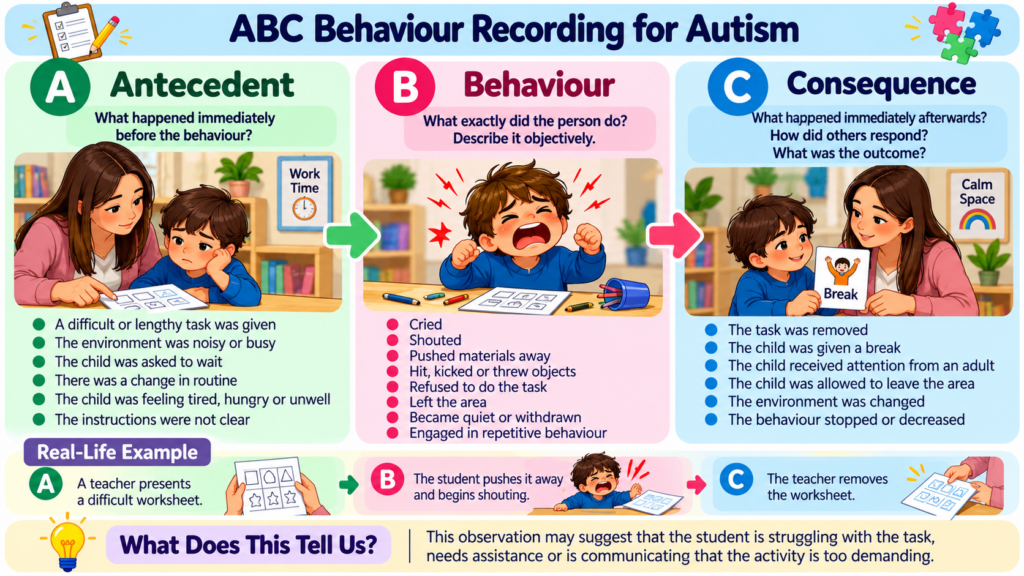
A useful starting point is the ABC approach.
A — Antecedent: What happened immediately before the behaviour?
B — Behaviour: What exactly did the person do? Describe it objectively.
C — Consequence: What happened immediately afterwards?
مثلاً:
A teacher presents a difficult worksheet. A student pushes it away and begins shouting. The teacher removes the worksheet.
This observation may suggest that the student is struggling with the task, needs assistance or is communicating that the activity is too demanding.
However, one observation does not prove the reason. Look for patterns across different situations and consider communication, sensory needs, health, sleep and other possible factors.
2. Make the Environment More Supportive
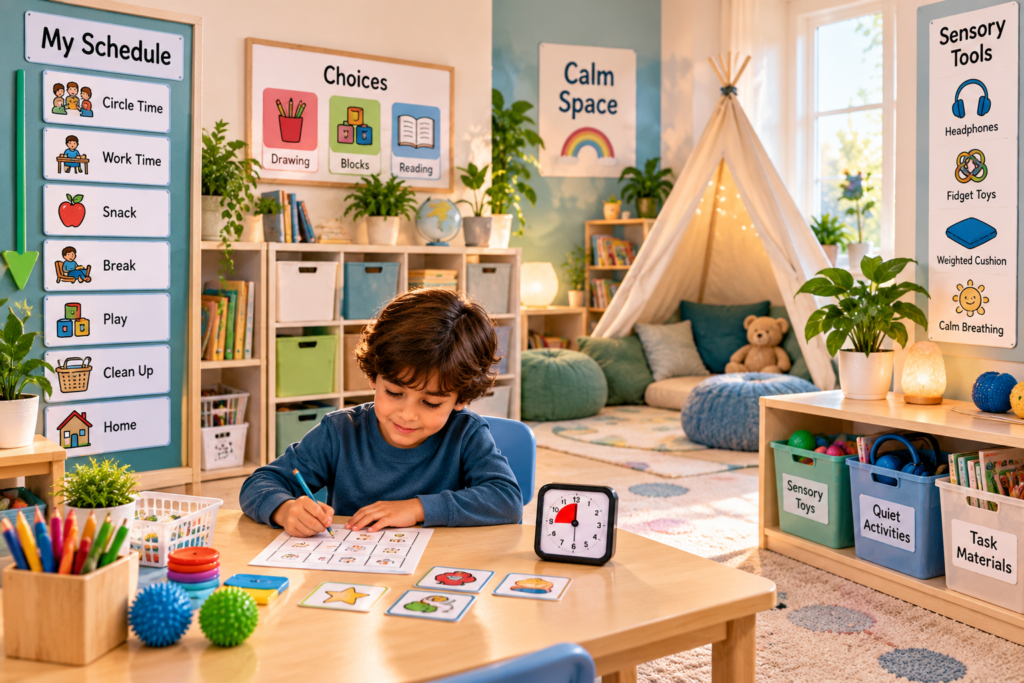
Instead of waiting for distress to occur, identify ways to make the environment more comfortable and predictable.
Helpful strategies include:
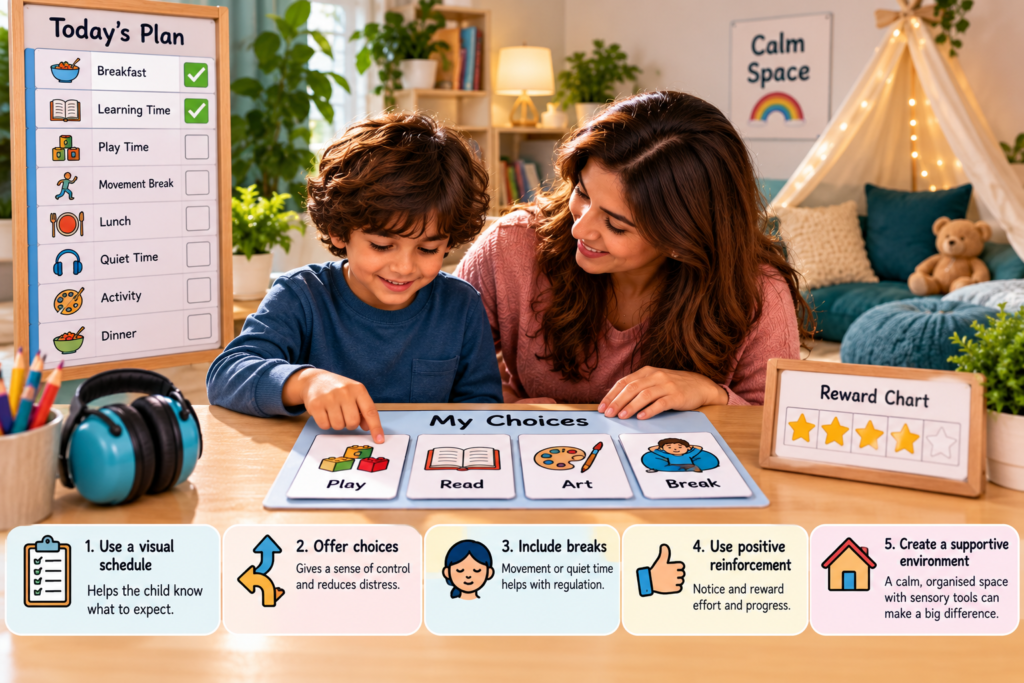
- Using visual schedules to show what happens next.
- Providing advance notice of changes when possible.
- Breaking lengthy activities into smaller steps.
- Offering quieter spaces or sensory adjustments.
- Reducing unnecessary demands during periods of distress.
- Allowing movement and rest breaks.
- Providing choices about activities, materials and timing.
For example, a child who becomes distressed when transitioning away from a favourite activity may benefit from a visual countdown, a clear explanation of what comes next and a choice between two acceptable transition activities.
These supports should be individualised. A strategy that helps one person may be uncomfortable or ineffective for another.
3. Teach Communication and Meaningful Skills
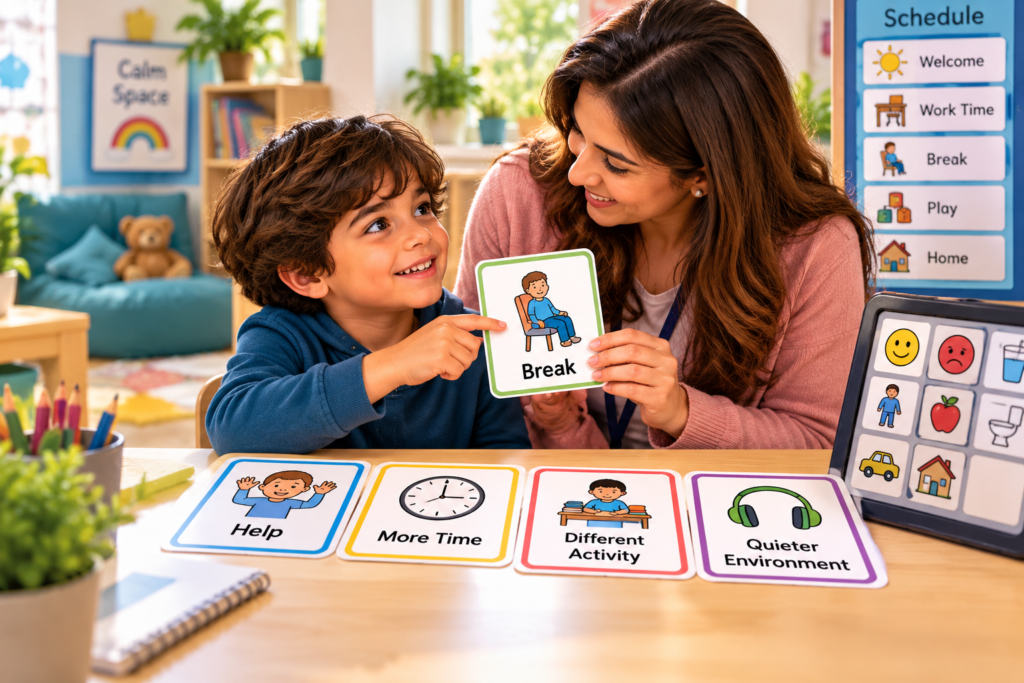
Positive behaviour support does not simply ask a person to stop doing something. It helps them develop ways to communicate and meet their needs.
For example, a child who throws materials when a task becomes difficult may benefit from learning how to request:
- Help
- A break
- More time
- A different activity
- A quieter environment
Communication does not need to involve spoken words.
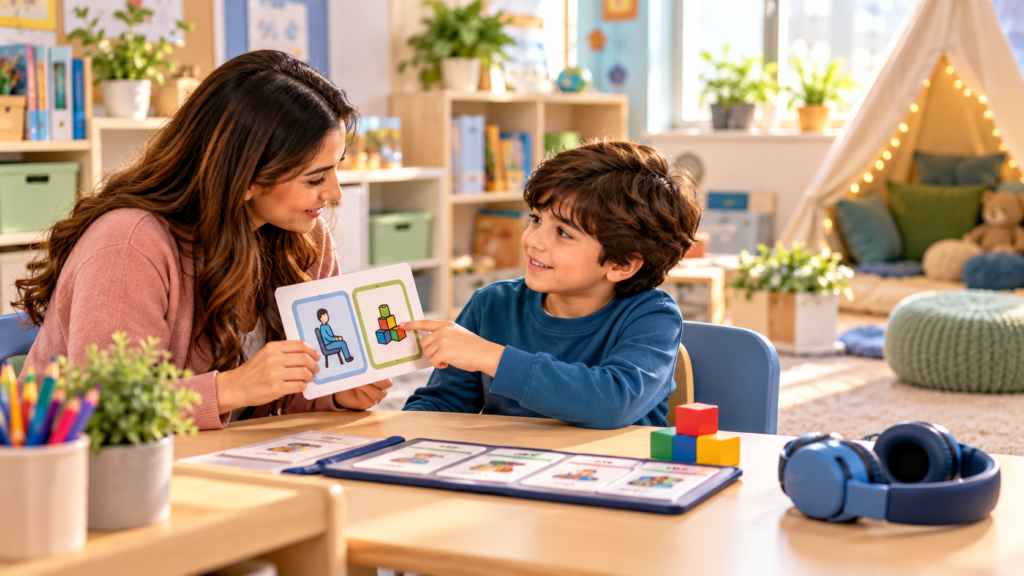
A person may use pictures, gestures, signs, written words, a communication device or another accessible method.
Make sure the person can use their communication system when they need it, including during distress.
Importantly, requests for a break or help should be taken seriously. If communication is repeatedly ignored, the person may have less reason to trust that communicating will work.
4. Respond to Distress With Safety and Respect
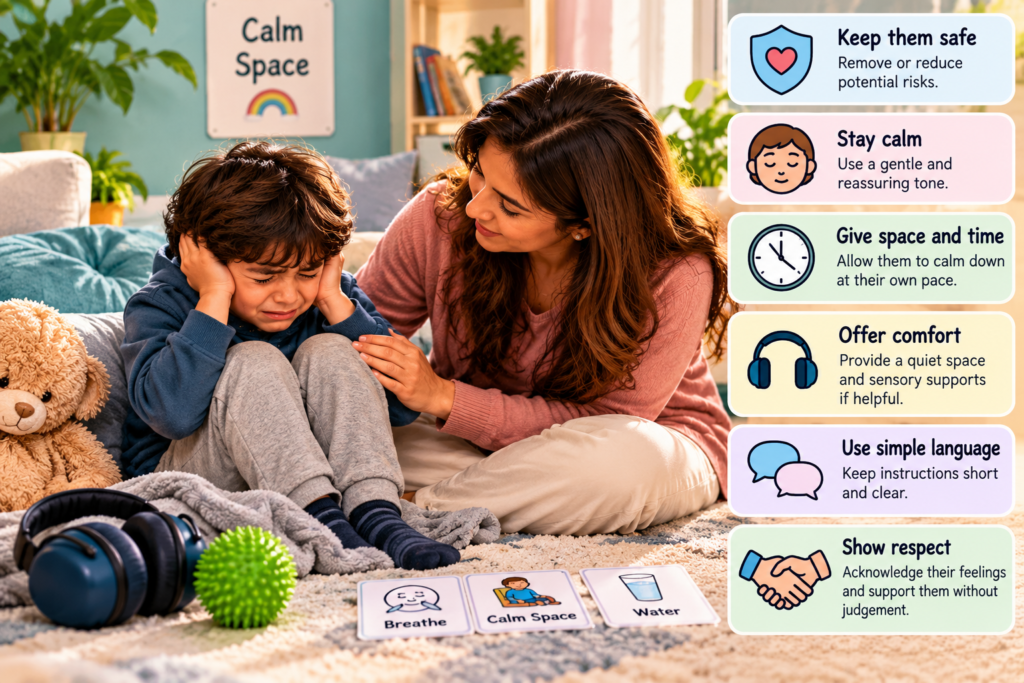
When someone is becoming overwhelmed, lengthy explanations, repeated instructions and arguments can make the situation more difficult.
A supportive response may involve:
- Speaking calmly and using fewer words.
- Giving the person physical space.
- Reducing noise, demands or other stressors.
- Removing hazards if this can be done safely.
- Offering a familiar communication option.
- Allowing time for recovery.
Avoid threats, humiliation, forced eye contact, unnecessary physical contact or punishment for communicating distress.
If the person is at risk of serious injury, seek appropriate urgent help and follow a professionally developed safety plan.
After the person has recovered, consider what contributed to the distress and what changes could prevent it from happening again.
5. Review Whether the Support Is Actually Helping
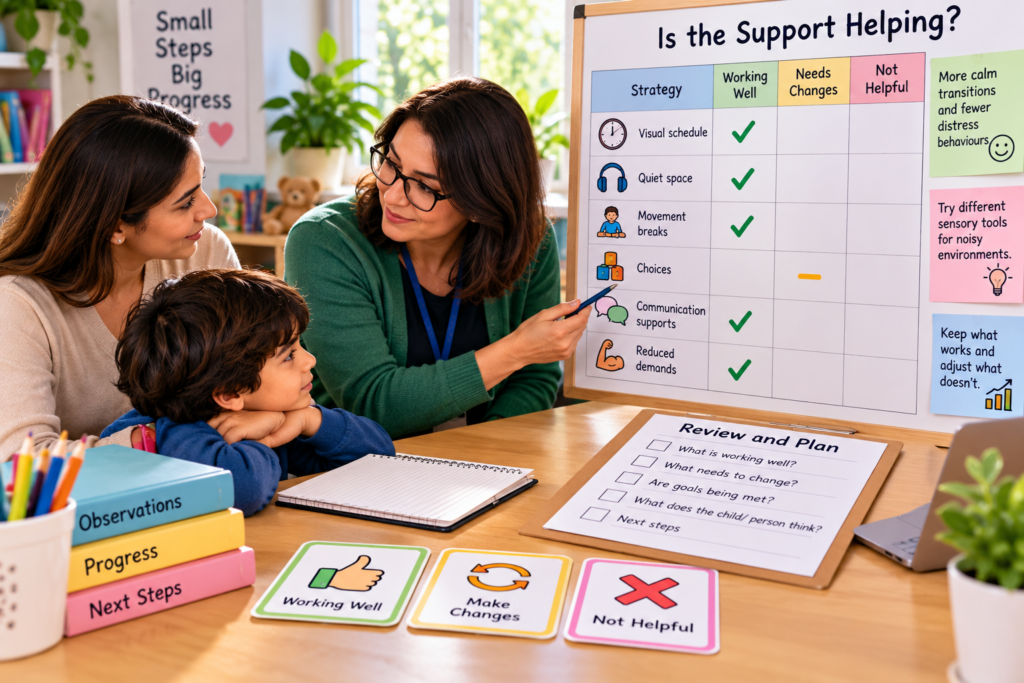
A behaviour support plan should not remain unchanged simply because it has been written down.
Review the plan regularly with the person, their family and relevant support professionals.
Ask:
- Is the person experiencing less distress?
- Are they communicating their needs more successfully?
- Are activities more accessible?
- Do they have greater independence and meaningful choices?
- Are the supports improving their everyday quality of life?
Collecting information can help identify patterns, but numbers alone do not tell the whole story. A reduction in visible behaviour is not necessarily a positive outcome if the person is becoming withdrawn, fearful or unable to express discomfort.
The person’s own experience matters.
Positive Behaviour Support at Home: A Practical Example
Imagine a child who becomes upset every morning when it is time to get dressed for school.
Instead of repeatedly saying, “Get dressed now,” the family begins to investigate.
They discover that the child dislikes the feeling of certain clothing labels and struggles when several instructions are given at once.
The family makes a few changes:
- They remove uncomfortable clothing labels and offer preferred clothing.
- They prepare the clothes the night before.
- They use a simple visual morning routine.
- They allow the child to choose between two outfits.
- They teach the child to communicate when they need help or more time.
Over the following weeks, the family reviews whether mornings are becoming more comfortable.
This example illustrates the central idea of PBS: improve the conditions around the person, understand their needs and teach skills that support participation.
Download Your Free Positive Behaviour Support Toolkit
Putting these principles into practice can feel overwhelming, particularly when families are managing several daily challenges.
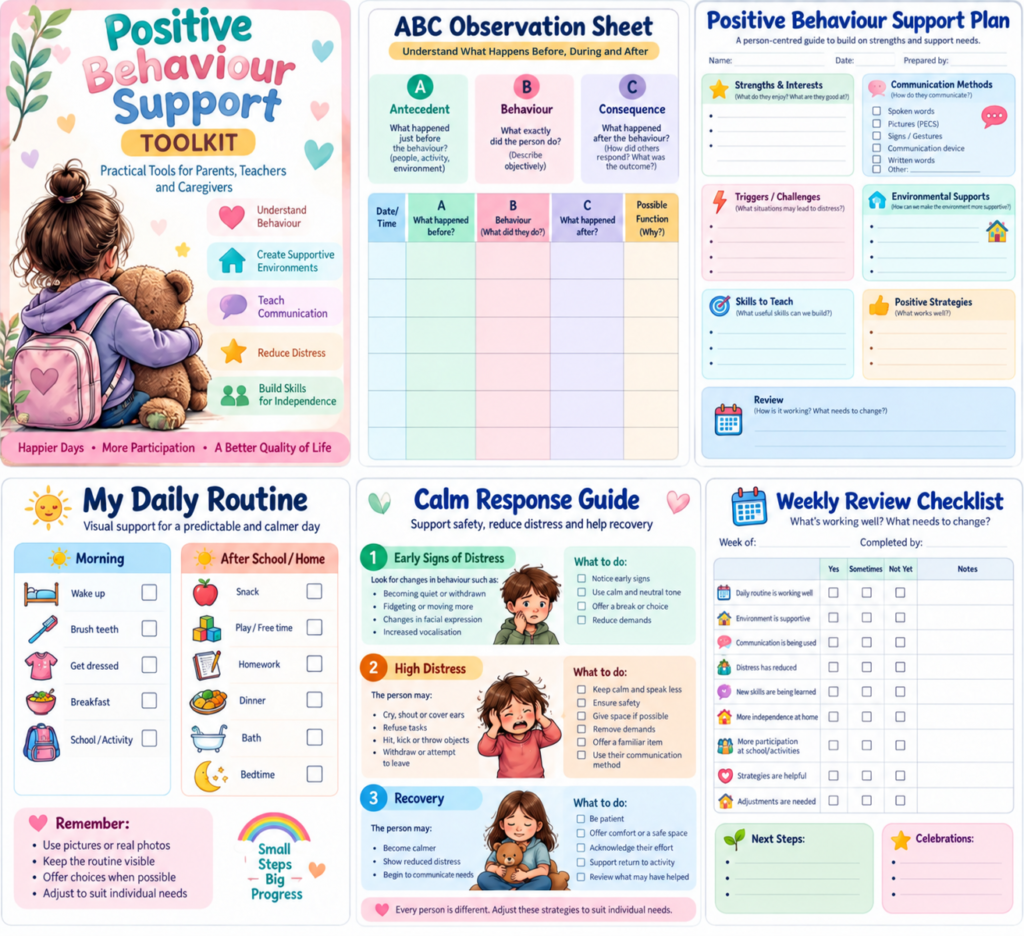
To help you get started, use the printable toolkit accompanying this article.
It includes:
- ABC Observation Sheet: Record what happened before and after a behaviour to help identify patterns.
- Positive Behaviour Support Plan: Document strengths, communication preferences, environmental adjustments and skills to teach.
- Distress Response Guide: Plan supportive responses for early signs of distress, high distress and recovery.
- Weekly Review Checklist: Reflect on what is working and what needs to change.
Use these worksheets as a starting point rather than a substitute for individual assessment. For complex or high-risk situations, work with a qualified professional who understands the person’s communication, needs and circumstances.
Common Mistakes to Avoid
Positive behaviour support can lose its purpose when it becomes another way of demanding compliance.
Avoid these common mistakes:
Assuming all behaviour has the same cause: The same behaviour may occur for different reasons in different situations. Look for patterns rather than jumping to conclusions.
Ignoring communication: A person who says no, requests a break or communicates discomfort is expressing important information. Do not automatically treat this as a behaviour problem.
Using rewards to suppress distress: Positive reinforcement can support meaningful learning, but it should not be used to pressure someone into tolerating pain, sensory overload or unsafe situations.
Focusing only on the behaviour: Success should include improved wellbeing, communication, independence and participation—not merely fewer visible signs of distress.
Expecting immediate change: Learning new skills and building trust takes time. Review your approach and adjust it when it is not helping.
Final Thoughts
Positive Behaviour Support begins with curiosity, compassion and respect.
When we ask what a person may be communicating, make their environment more accessible and teach skills that help them express their needs, we move away from punishment and towards meaningful support.
Every person deserves to be understood, to communicate in their own way and to participate in everyday life with dignity.
Start small. Observe one challenging situation, identify one possible barrier and make one supportive change. Then review what happens.
Disclaimer: This article provides general educational information. It is not a diagnostic tool or an individualised behaviour intervention plan. Behaviour that changes suddenly, involves serious injury or raises concerns about pain or illness should be assessed by an appropriate healthcare professional.
جواب دیں