5 Nov 2026 · @Rubab N
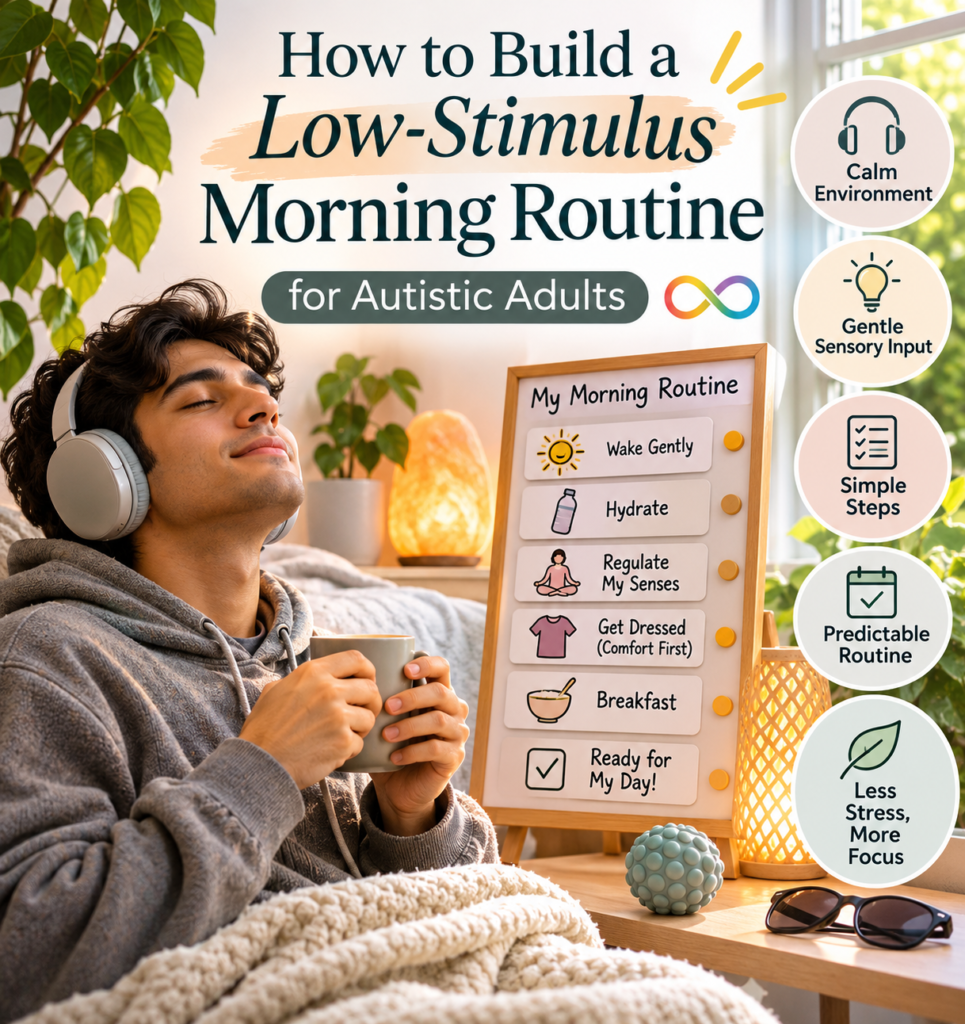
Mornings are often the hardest part of the day for autistic adults, because they stack sensory input, decisions, and transitions into a short window before you’ve had any time to settle.
Alarms, bright bathroom lights, scratchy fabric, strong toothpaste, a crowded kitchen, a rushed commute: each is small on its own. Together, they can drain energy before 9 a.m. and leave you more prone to overload, shutdown, or meltdown later in the day.
A low-stimulus morning routine doesn’t mean a boring one, or one that looks like anyone else’s. It means deliberately lowering the sensory load, the number of choices, and the surprises, so your nervous system starts the day with spare capacity instead of a deficit. Everyone’s sensory profile is different, so treat what follows as a menu to adapt, not a prescription.
Prefer a printable copy? Download the colorful PDF version of this guide to keep on your fridge or phone.
How to Start Your Low-Stimulus Morning Routine the Night Before
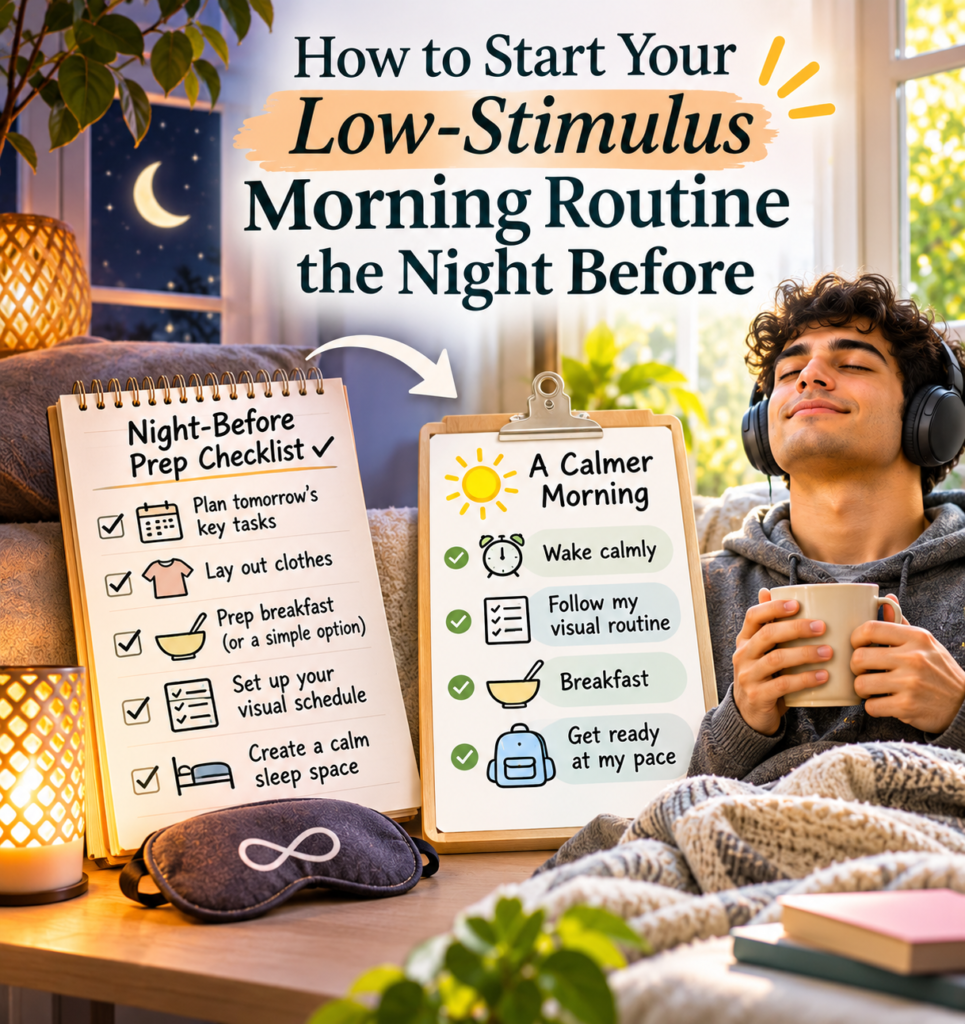
The lowest-stimulus morning is one where most decisions were already made the evening before, when you have more energy and less time pressure.
Try a short “set-up” ritual of 10 to 15 minutes:
- Lay out clothes, including socks and underwear, in the order you’ll put them on.
- Pack your bag and put keys, wallet, phone, and headphones in one fixed spot.
- Decide breakfast and set out anything you’ll need, such as a bowl or a pill organizer.
- Check tomorrow’s schedule once, so there are no surprises you’d otherwise discover at 7:45 a.m.
The goal is a morning that runs on autopilot. This is the secret to maintaining a consistent low-stimulus morning routine. If a task still requires a decision, ask whether it can be moved to the night before or removed entirely.
Wake gently, and protect the first ten minutes

The way you wake up sets the tone, so swap jarring signals for gradual ones.
- Light: A sunrise-simulating lamp or a dim bedside light is easier on the senses than a ceiling light or a phone screen. Keep curtains partly open if natural light is comfortable for you.
- Sound: If a standard alarm startles you, try a soft, rising tone, a vibrating wristband, or a single calm track. Some people prefer the same sound every day because it’s predictable.
- Stillness: Give yourself 5 to 10 minutes in bed before doing anything. No email, no news, no social media. Stretch, breathe, or just lie there.
- Warning: If you need more time to “boot up,” set the alarm earlier rather than hitting snooze repeatedly. Fragmented sleep is more disorienting than one clean wake-up.
The point of those first minutes in your low-stimulus morning routine is to let your brain arrive at its own pace, before the world asks anything of it. Lowering this initial stress capacity is a critical baseline strategy when it comes to handling an autism meltdown later in the day.
Make hygiene and dressing sensory-friendly

Bathrooms and wardrobes are full of sensory triggers, but tailoring these spaces to a low-stimulus morning routine can clear these hurdles with a one-time purchase or setting.
- Lighting: Swap harsh overhead bulbs for warm, dimmable ones, or use a small lamp instead.
- Products: Choose unscented or mild-scented soap, shampoo, and deodorant. If mint toothpaste is too intense, look for milder or flavor-free options.
- Water: Find the temperature and pressure that feels safest, and keep it consistent. A handheld shower head can give you more control.
- Textures: Wear tagless, seamless clothing in fabrics you already know you tolerate. Buy multiples of what works so you can repeat outfits without thinking.
- Order: Do things in the same sequence every day. A written or pictured checklist on the bathroom mirror can remove the need to remember.
There’s no prize for tolerating discomfort. If something hurts or distracts you every day, replacing it is a legitimate accommodation, not a luxury.
Keep breakfast predictable

A “safe” breakfast that you eat most days is a good use of routine, because it removes a decision and a sensory gamble at the same time.
Many autistic adults have strong food preferences tied to texture, temperature, smell, or appearance. Rather than treating that as a problem to fix at 7 a.m., build around it: According to research on neurodivergent daily living skills hosted by the National Institutes of Health, establishing consistent step-by-step routines directly minimizes cognitive depletion.
- Pick one to three breakfasts you reliably enjoy and rotate between them.
- Keep the kitchen quiet if you can. Turn off the radio, close the door, or wear headphones while you prepare food.
- If appetite is low in the morning, try something small and easy, such as a drink or a snack you can eat later, rather than skipping fuel entirely.
- Take any medication or supplements at the same point each day, and keep them where you’ll see them.
If you share a home, agree on a quiet-morning norm with the people you live with, such as no surprise conversations until you’ve finished eating.
Ease the transition out the door
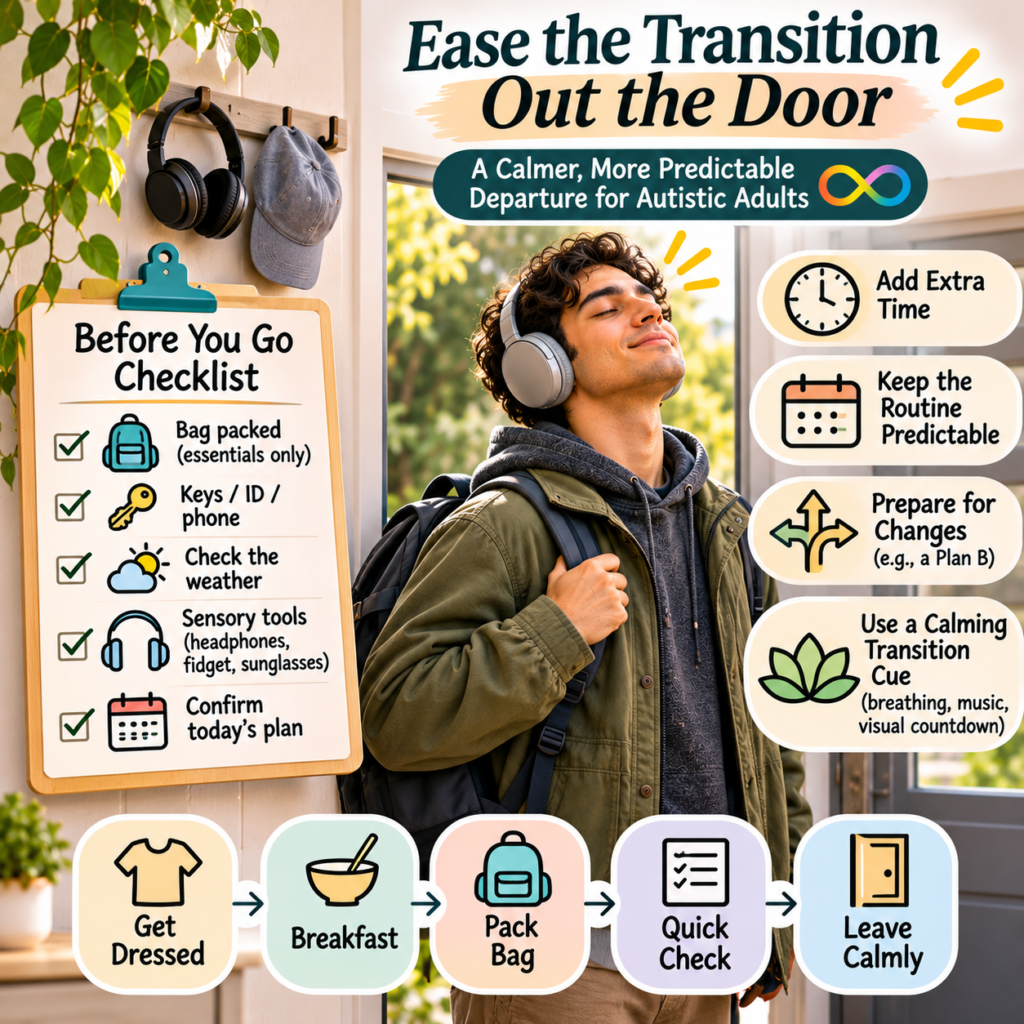
Leaving the house is a big shift from a controlled space to an unpredictable one, so give it a buffer and a plan.
- Buffer time: Add 15 to 20 minutes beyond what you think you need. Rushing is itself a sensory and emotional stressor.
- Protective gear: Keep sunglasses, noise-reducing earplugs or headphones, a hat, or a fidget item in your bag or by the door, and use them before you need them.
- Route: If possible, choose the quieter commute, the less crowded train car, or the time that avoids rush hour.
- Landing plan: Know what you’ll do when you arrive. A few minutes of quiet at your desk or in your car before the first task can help you reset.
If you work from home, the same idea applies. Create a clear “start of work” cue, such as a cup of tea or changing your chair, so the day has a gentle edge.
Build in flexibility for bad days
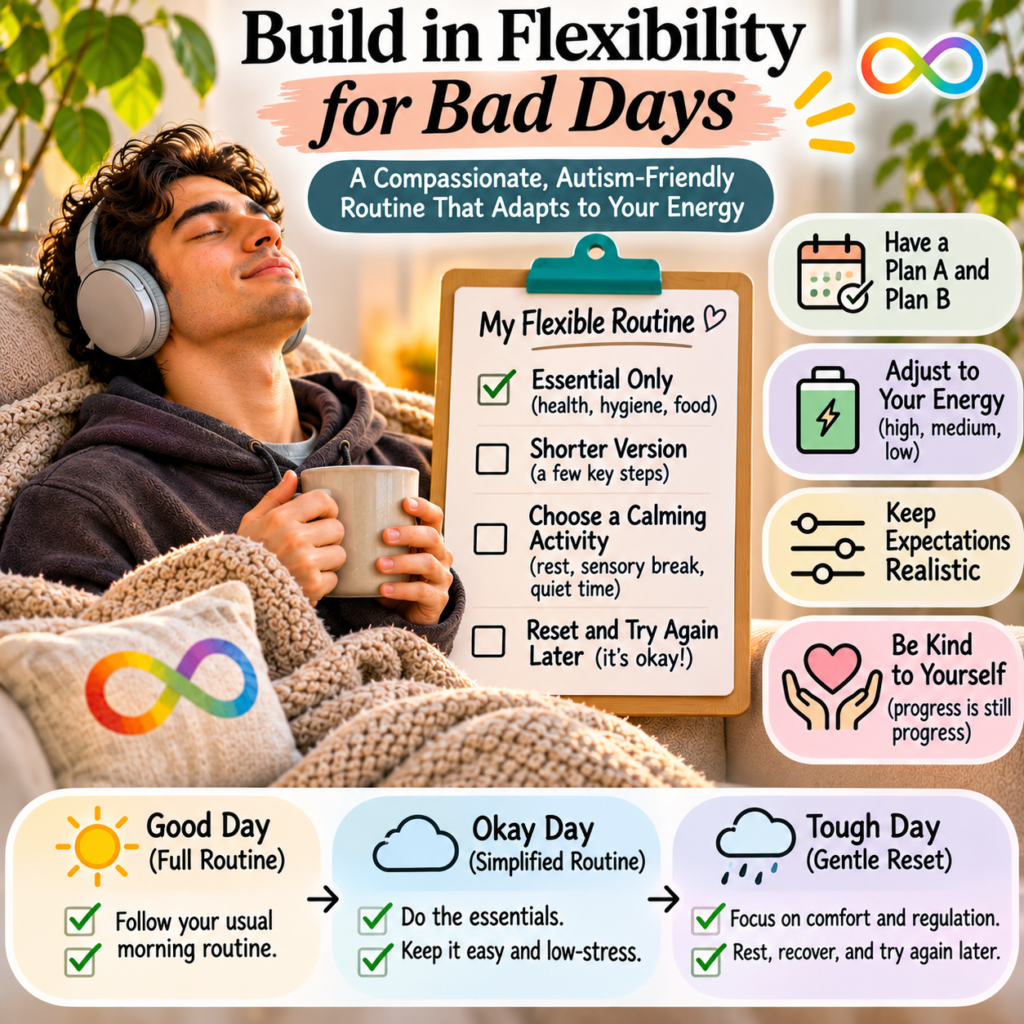
A good routine bends without breaking, because rigid routines can turn into another source of stress when life interrupts them.
- Make a “minimum version”: Decide the three things that matter most on a rough morning, such as medication, food, and getting dressed, and let the rest go.
- Plan for change: When something unexpected happens, a train delay or a guest, name the change out loud or write it down, then adjust one step at a time.
- Track what helps: For two weeks, note what drained you and what felt calm. Change one thing at a time so you can tell what’s working.
- Be kind about it: Skipped steps don’t mean you’ve failed. They’re data about what your body needs that day.
Routines support you, not the other way around. If a step stops helping, it can go. Clinical documentation in the NCBI Sensory Assessment Database emphasizes that tailoring ambient home environments helps prevent sensory fatigue across a lifespan.
A sample routine to adapt
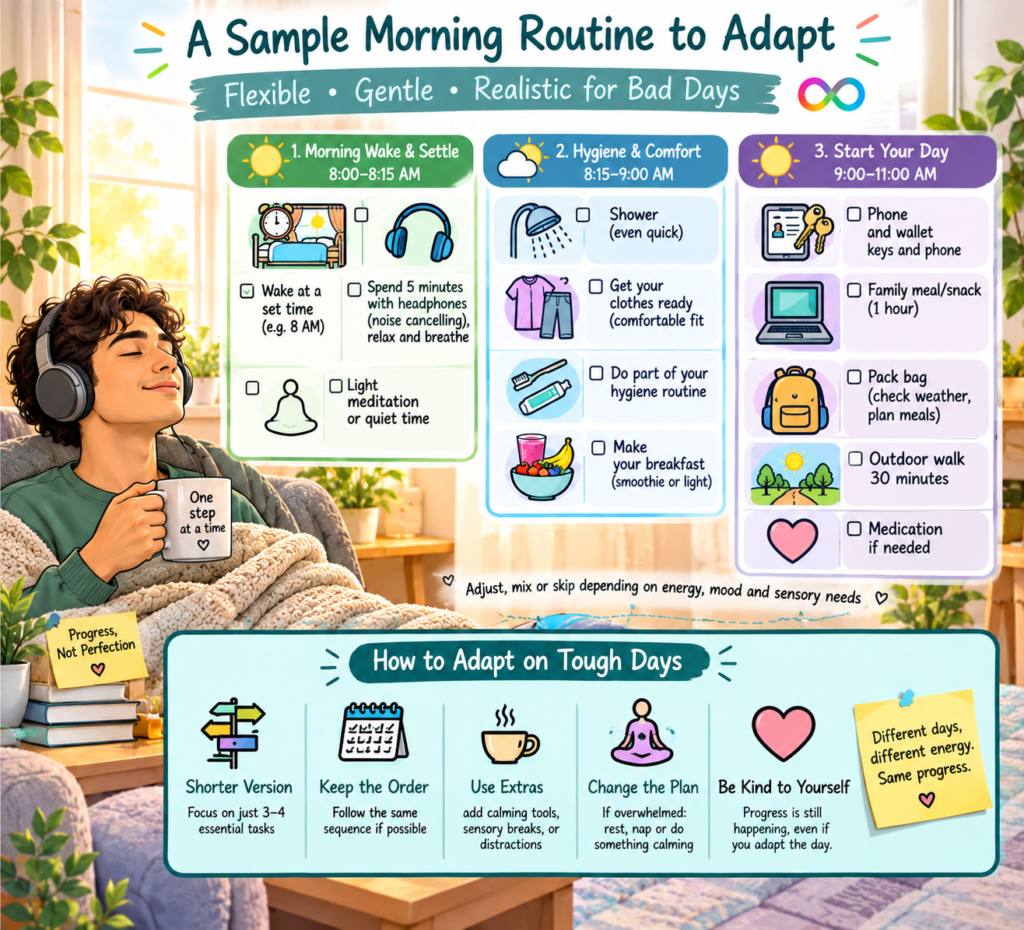
Here is one example of how these ideas fit together; change the times and steps to suit your own body and schedule.
| Time | Step | Sensory note |
|---|---|---|
| 6:30 | Wake with a sunrise lamp and a soft alarm | No screens |
| 6:35 | Lie still, stretch, breathe | Quiet, dim light |
| 6:50 | Shower and dress from the laid-out outfit | Warm light, unscented products |
| 7:10 | Eat the usual breakfast and take medication | Headphones on if the house is noisy |
| 7:30 | Check bag, keys, and protective gear | Everything in one spot |
| 7:40 | Leave with buffer time | Sunglasses and earplugs ready |
Morning routines can’t remove every difficulty, but they can make the first hours of your day gentler and more your own. Start with one change this week, such as laying out clothes tonight, and build from there at your own pace. Investing a little time into setting up your own low-stimulus morning routine is the best way to protect your mental energy for the rest of the day.
References
- National Institutes of Health. (2022). Daily living skills of autistic adolescents and young adults. PubMed Central (PMC). nih.gov
- National Center for Biotechnology Information. (2017). Assessing sensory processing dysfunction in adults and adolescents with autism spectrum disorder. PubMed. nih.gov
Disclaimer:The information provided on The Autism Routine Hub is for educational, informational, and knowledge-sharing purposes only. While written by a Behavioral Scientist (MSc ABA), the content, strategies, and downloadable printables shared on this website are not a substitute for professional medical advice, clinical diagnosis, or personalized therapeutic intervention. Always consult with a qualified healthcare provider, pediatrician, or certified behavioral professional regarding your specific situation or medical concerns.
جواب دیں