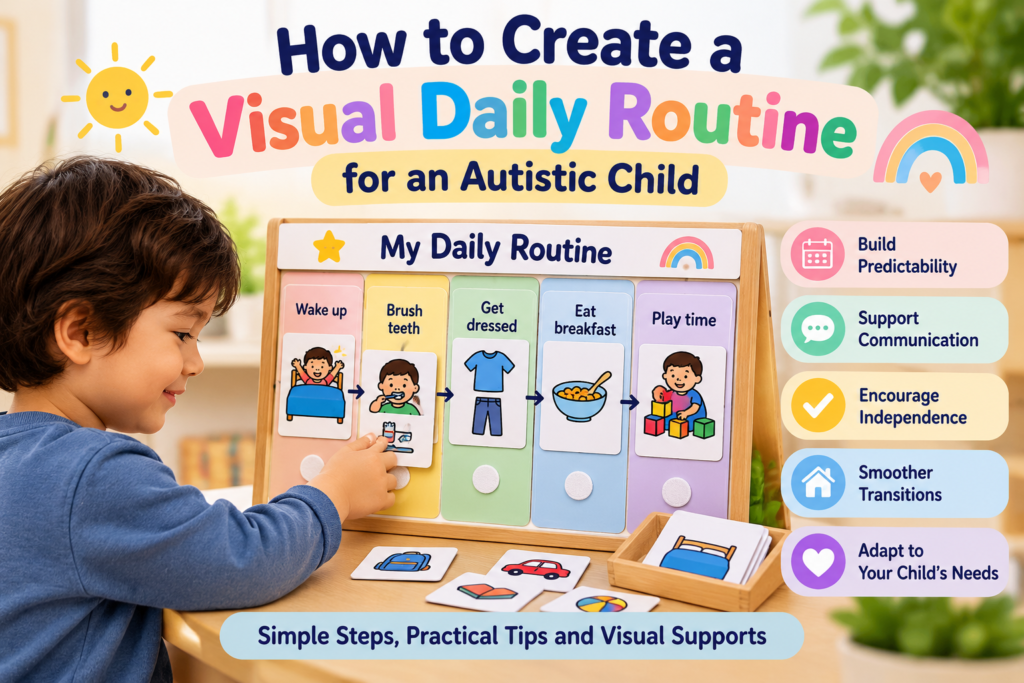
A visual daily routine can help some autistic children understand what happens next, prepare for transitions, and participate more independently in everyday activities. Every child is different, so adapt the routine to your child’s communication style, age, and needs.
What Is a Visual daily Routine?
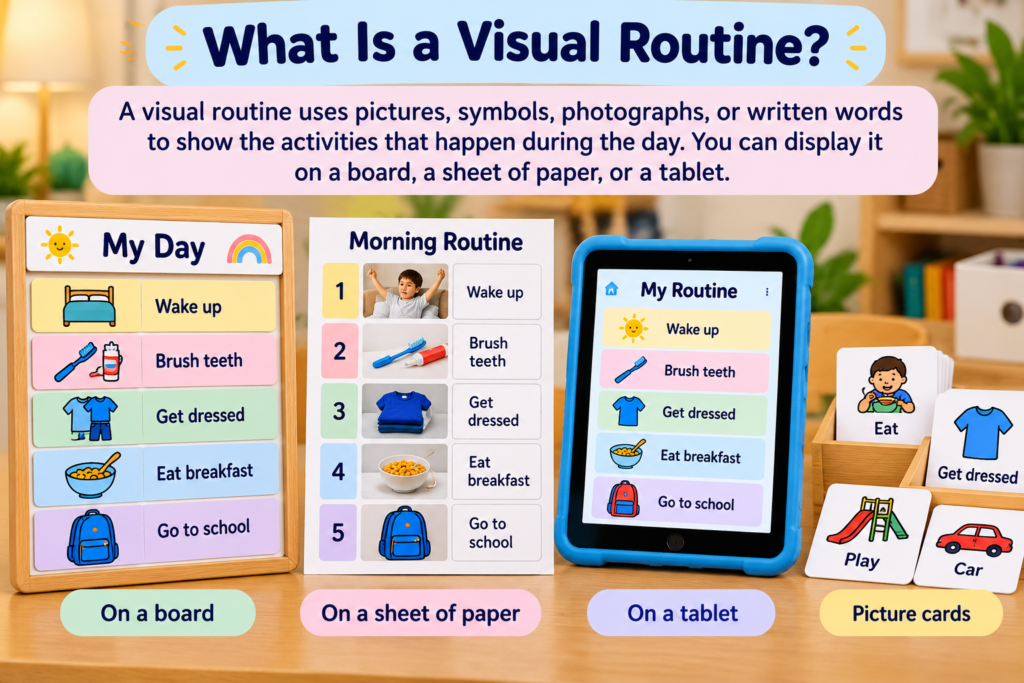
A visual routine uses pictures, symbols, photographs, or written words to show the activities that happen during the day. You can display it on a board, a sheet of paper, or a tablet.
How to Create a Simple Routine
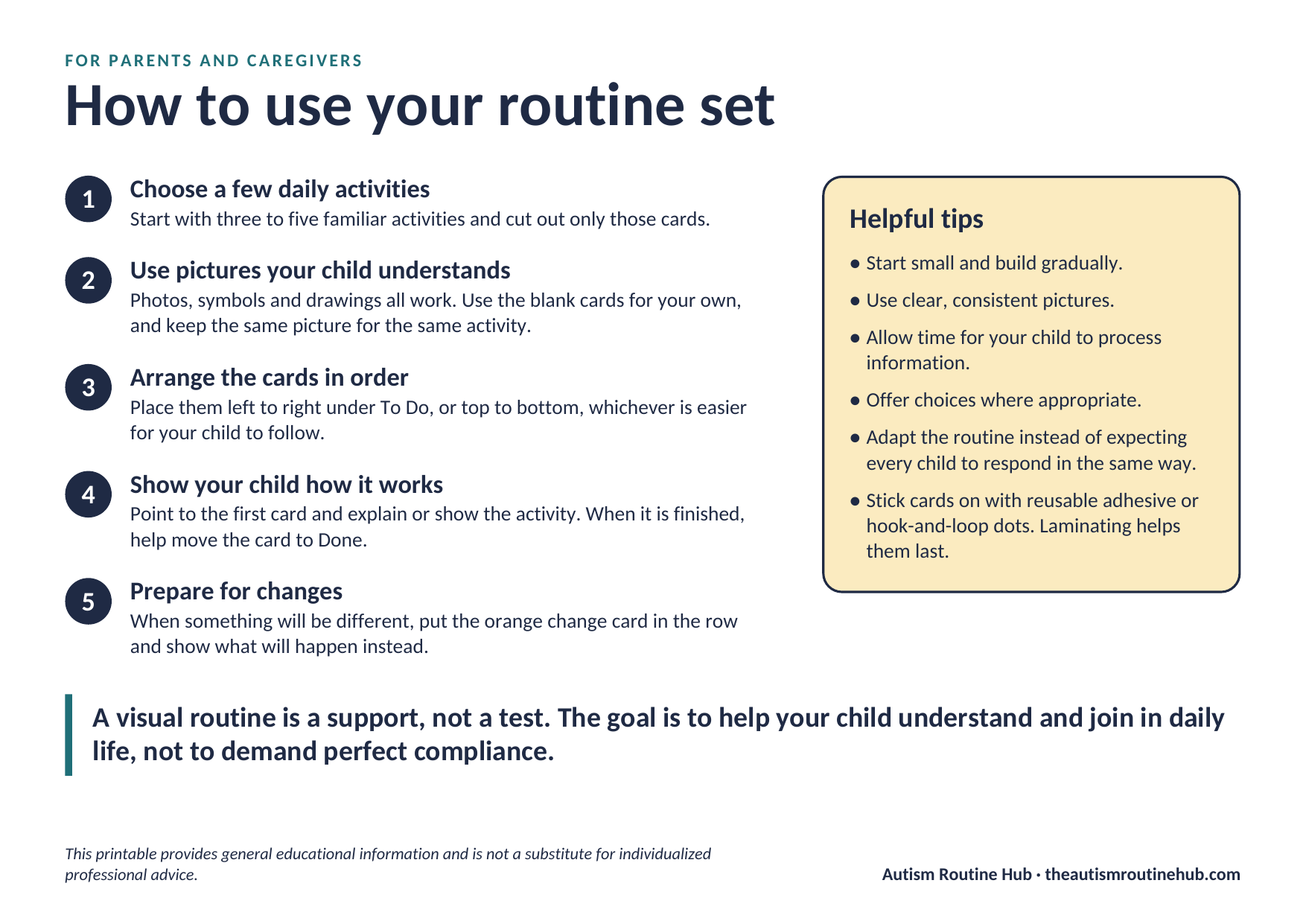
1. Choose a few daily activities
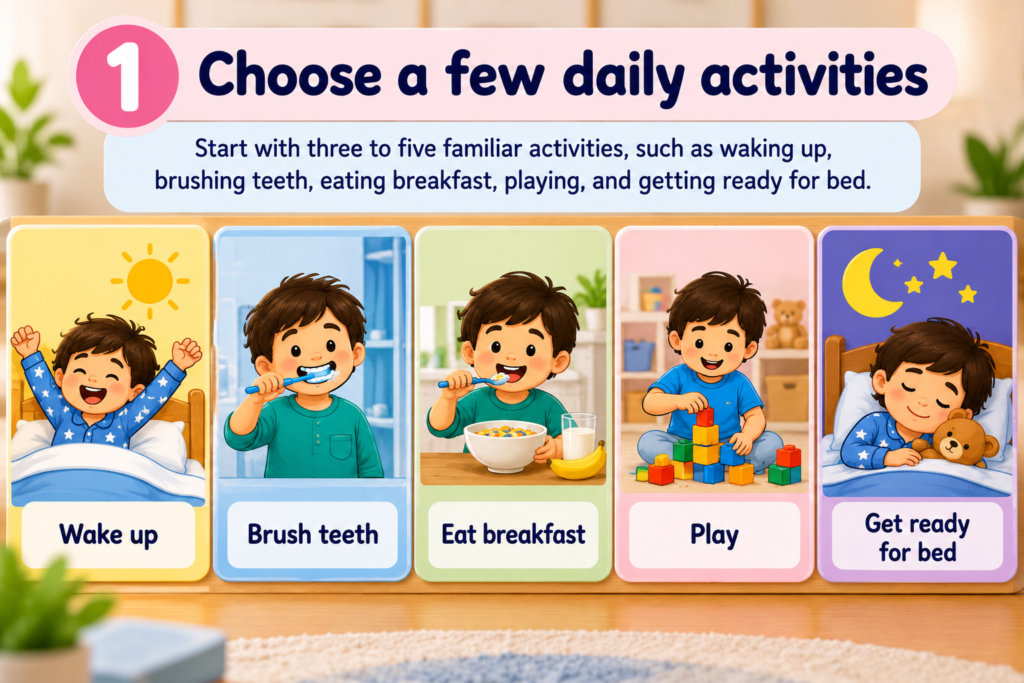
Start with three to five familiar activities, such as waking up, brushing teeth, eating breakfast, playing, and getting ready for bed.
2. Use pictures your child understands
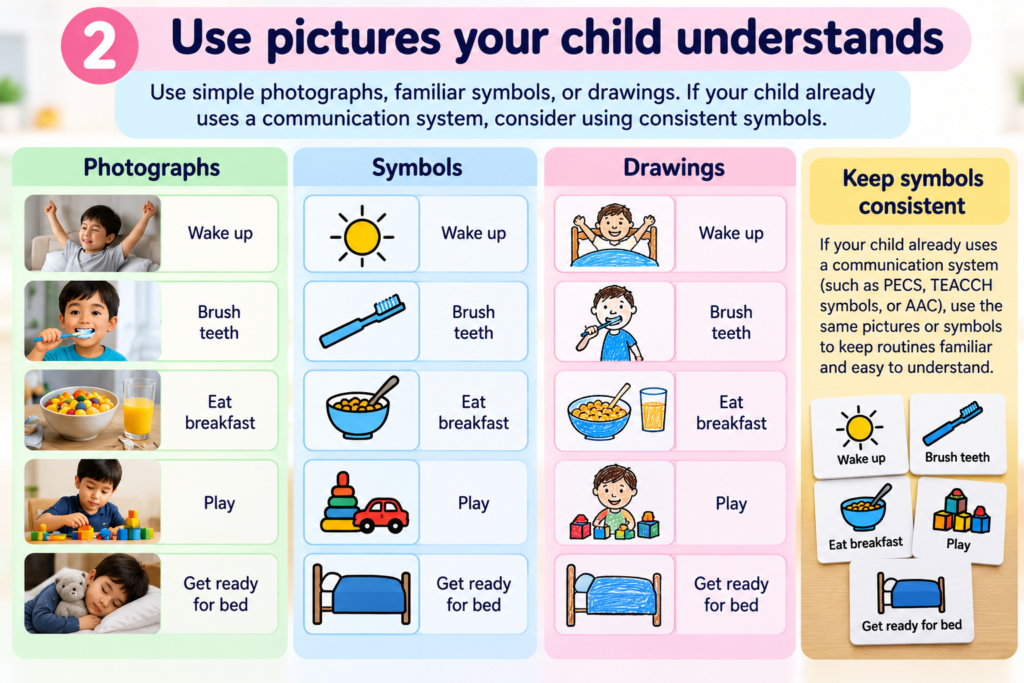
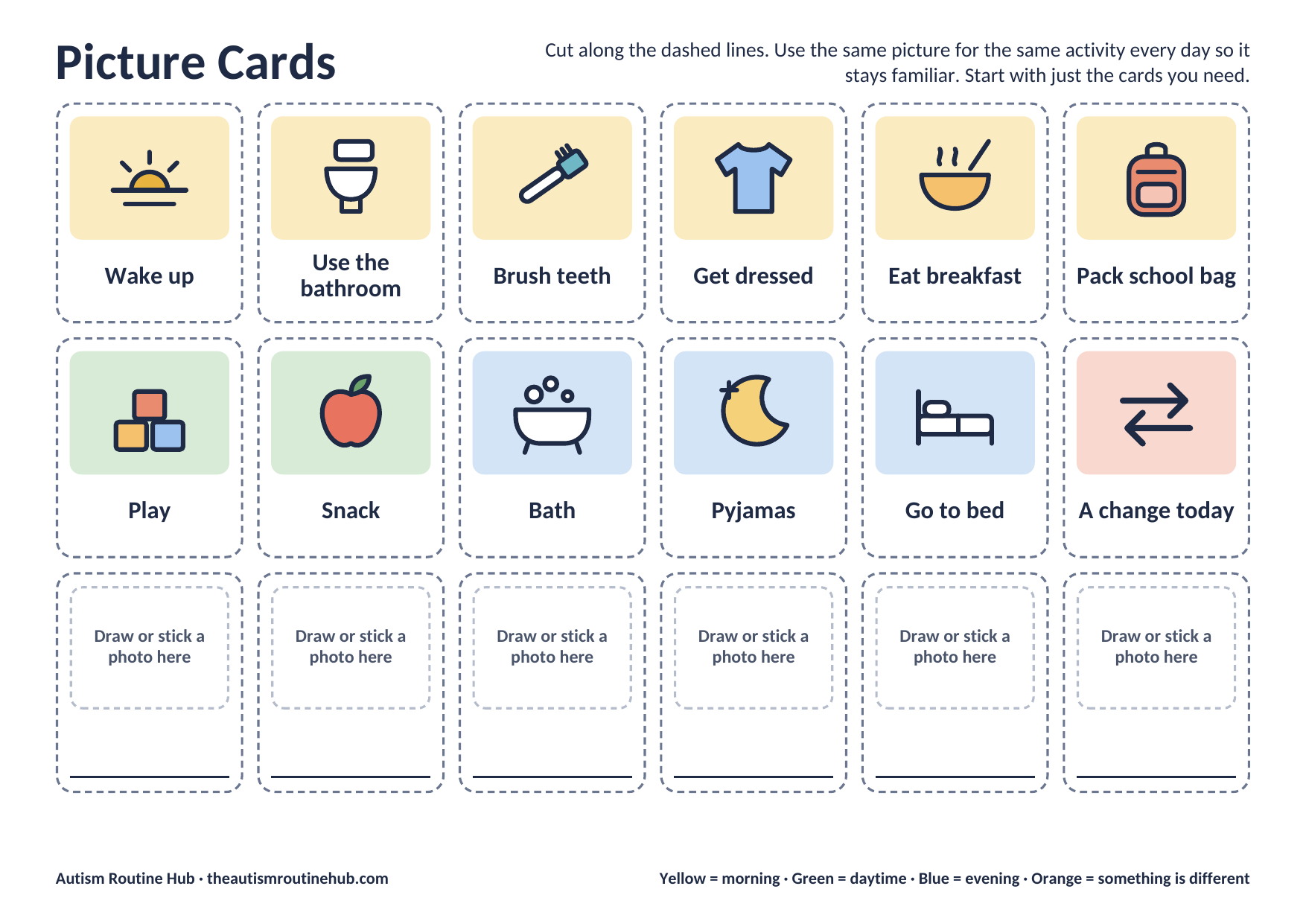
Use simple photographs, familiar symbols, or drawings. If your child already uses a communication system, consider using consistent symbols.
3. Arrange activities in order
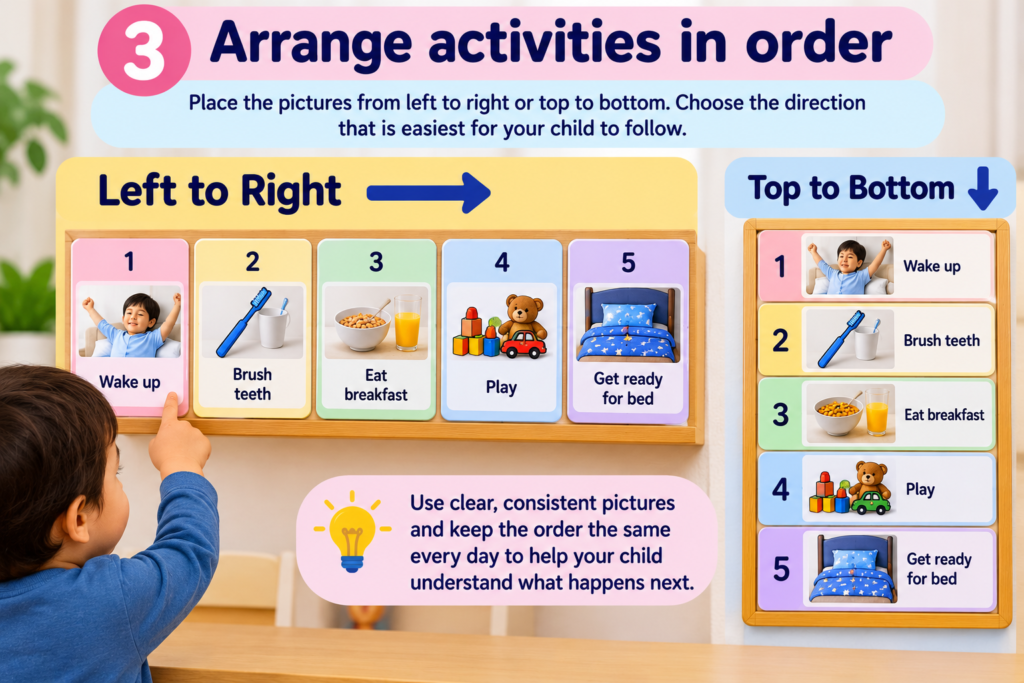
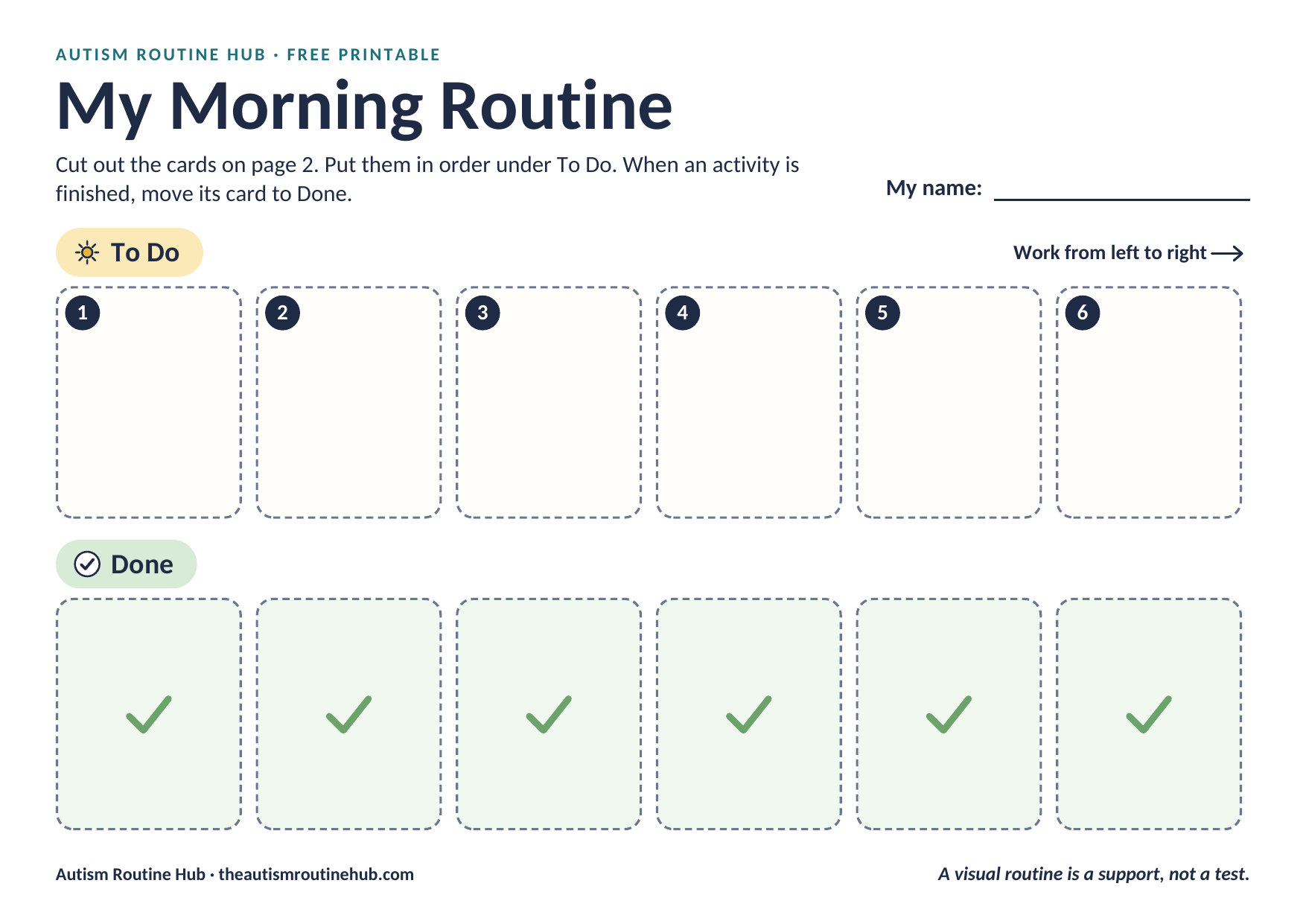
Place the pictures from left to right or top to bottom. Choose the direction that is easiest for your child to follow.
4. Show your child how to use the routine
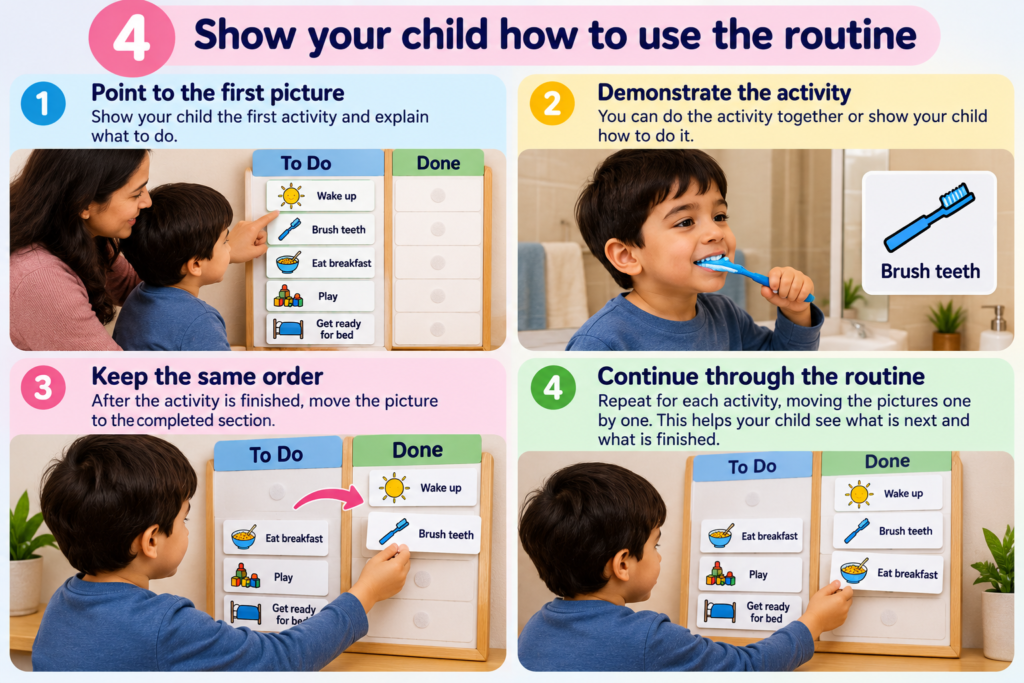
Point to the first picture and explain or demonstrate the activity. When it is finished, help your child move the picture to a completed section if that is helpful.
5. Prepare for changes
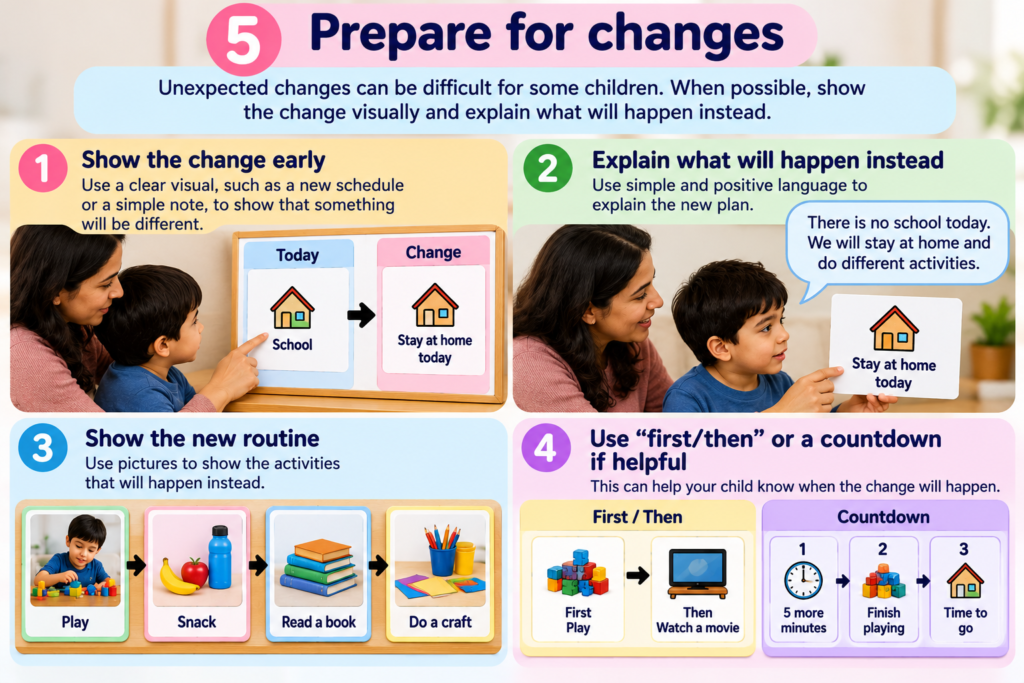
Unexpected changes can be difficult for some children. When possible, show the change visually and explain what will happen instead.
Example of a Morning Routine
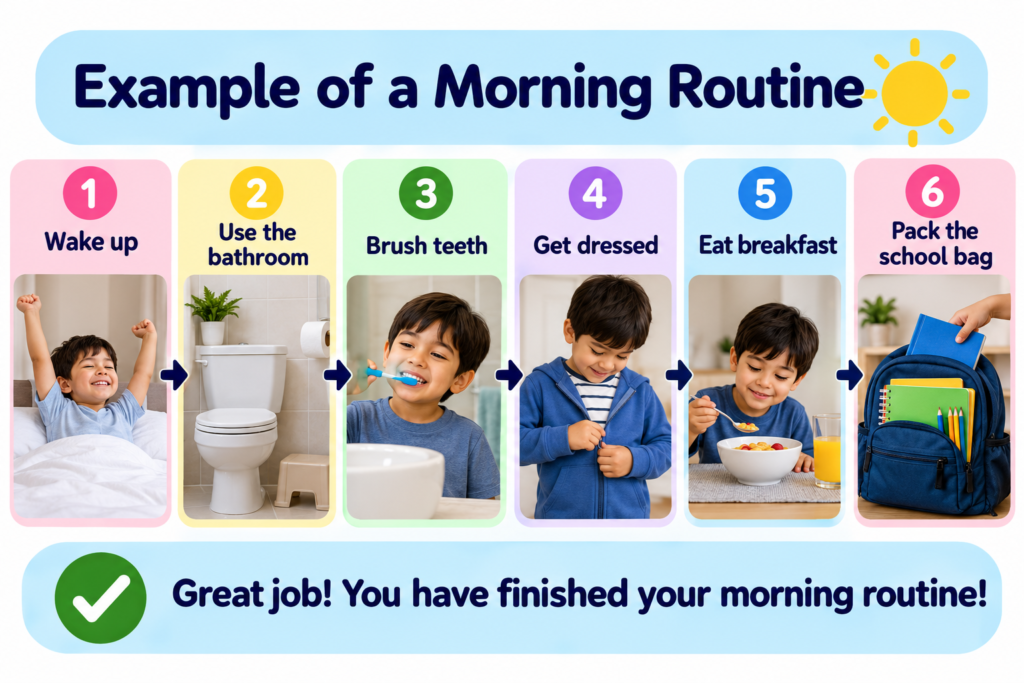
- Wake up
- Use the bathroom
- Brush teeth
- Get dressed
- Eat breakfast
- Pack the school bag
Helpful Tips for Parents
- Start small and build gradually.
- Use clear, consistent pictures.
- Allow enough time for your child to process information.
- Offer choices where appropriate.
- Adapt the routine instead of expecting every child to respond in the same way.
Remember: A visual routine is a support, not a test. The goal is to help your child understand and participate in daily life, not to demand perfect compliance.
This article provides general educational information and is not a substitute for individualized professional advice.
Keywords:
Autism Daily Routine, Visual Schedule for Autism, Autism Parenting Tips, Functional Communication Assessment, PECS at Home, TEACCH Strategies
🎁 Download Your Free Visual Support Toolkit
This 3-page, print-ready toolkit is an evidence-based system designed to take the stress out of your home transitions. Built strictly around clinical PECS and TEACCH frameworks, these pages help lower anxiety, establish predictable morning sequences, and build long-term structural autonomy for neurodivergent individuals. Tap each corresponding button below to save the high-resolution layouts straight to your device.
جواب دیں